
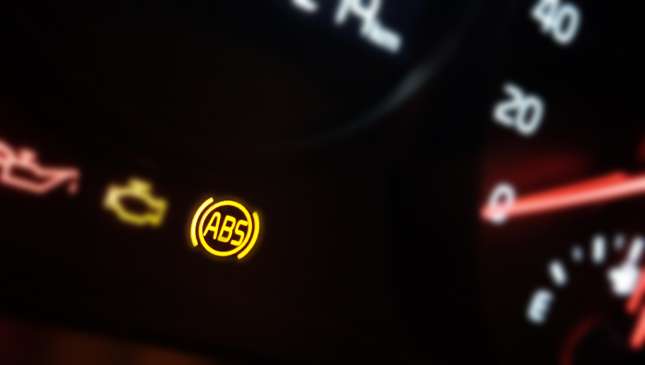
Replacing brake pads or rotors is usually one of the most satisfying DIY jobs a car owner can do. The pedal feels firmer, stopping distances improve, and everything seems back to normal—until you start the car and see it.
The ABS light.
For many drivers, this moment creates instant confusion. You didn’t touch the ABS system. You didn’t unplug any warning lights. So why is the ABS light on after a brake replacement?
This article is written to answer that exact question—clearly, practically, and without guesswork. We’ll walk through what to check first, why this happens so often after brake jobs, and how to diagnose the problem correctly before you spend money on unnecessary parts.
Understanding the ABS Light (Before You Panic)
The Anti-Lock Braking System (ABS) is not a separate system floating somewhere in your car. It is deeply integrated with:
-
Wheel speed sensors
-
Brake hydraulics
-
Traction control
-
Stability control (ESC)
So when the ABS light turns on after changing brakes and rotors, it doesn’t necessarily mean the ABS system “failed.” More often, it means the system detected unexpected data during or after the brake service.
That distinction matters.
An ABS warning light is a diagnostic alert, not a verdict.
Can Changing Brakes Cause the ABS Light to Come On?
Yes. And it happens more often than most people realize.
A brake job involves removing wheels, calipers, rotors, sometimes hubs—and all of those parts live inches away from ABS components. Even a careful technician can unintentionally trigger an ABS issue.
Here are the most common ways it happens:
-
ABS wheel speed sensor disturbed or contaminated
-
Sensor wiring stretched, pinched, or cracked
-
Tone ring damaged or covered in debris
-
Brake fluid level changed enough to trigger a warning
-
Battery voltage drop during service
-
ABS module detecting inconsistent wheel speed data after reassembly
None of these mean the brake job was “done wrong.” But they do mean something needs to be checked.
What to Check First When the ABS Light Comes On After Brake Replacement
Let’s start with the most important rule:
Do not replace parts yet. Diagnose first.
Step 1: Check for Other Warning Lights
Is it only the ABS light?
Or do you also see:
-
Traction control light
-
Stability control light
-
Brake warning light
If ABS and traction control lights are on after brake replacement, that usually points to a wheel speed sensor issue, not a hydraulic problem.
Step 2: Inspect the ABS Wheel Speed Sensors (Most Common Cause)
If there is one component responsible for most ABS lights after brake jobs, it’s this one.
Wheel speed sensors are mounted close to the hub or knuckle. During brake replacement, they are exposed to:
-
Brake dust
-
Rust flakes
-
Metal shavings
-
Accidental contact
What to Look For
-
Sensor not fully seated
-
Dirt or metal debris on the sensor tip
-
Cracked plastic housing
-
Sensor wire pulled tight or twisted
Even a small amount of debris can corrupt the signal enough to trigger an ABS fault.
This is why cleaning ABS speed sensors after brake dust buildup solves the issue in many cases.
Step 3: Inspect ABS Sensor Wiring (Often Overlooked)
The sensor itself might be fine—but the wiring may not be.
During a brake job, calipers are often hung or moved. If the sensor wire gets:
-
Stretched
-
Pinched between suspension parts
-
Rubbed against the rotor
The internal copper strands can break without visible damage on the outside.
Symptoms of damaged ABS sensor wiring during brake repair include:
-
ABS light stays on
-
No change in braking feel
-
Fault returns immediately after clearing
Step 4: Check the ABS Tone Ring (Reluctor Ring)
The tone ring is what the sensor reads.
Depending on the vehicle, it may be:
-
Built into the wheel bearing
-
Mounted on the axle
-
Pressed onto the hub
During brake and wheel bearing replacement, the tone ring can:
-
Crack
-
Get bent
-
Collect debris
Checking ABS tone ring for debris is especially important if:
-
You replaced rotors
-
You cleaned rust aggressively
-
You recently changed wheel bearings
A damaged tone ring sends inconsistent speed data—and the ABS module does not tolerate that.
Step 5: Verify Brake Fluid Level and Condition
This surprises many people.
If the brake fluid level drops slightly after pad replacement—or if air enters the system—the ABS module may interpret that as a fault.
Things to check:
-
Fluid level at MAX line
-
No visible leaks
-
No spongy or soft brake pedal
In some vehicles, bleeding brakes to fix ABS light is required after caliper replacement or line opening.
Why the ABS Light Comes On Even When Brakes Feel Fine
This is one of the most searched questions in the U.S.:
“ABS light on after brake job but brakes feel fine”
Here’s why that happens.
Normal braking and ABS braking are not the same system.
-
Normal braking = hydraulic pressure
-
ABS = electronic modulation during wheel lock
Your brakes can feel perfect during everyday driving, but the ABS module may still detect:
-
A missing sensor signal
-
A wheel reporting incorrect speed
-
A module communication fault
The system disables ABS as a safety precaution and turns on the light.
How to Reset the ABS Light After a Brake Job (The Right Way)
Many people try this first:
-
Disconnect the battery
-
Clear codes with a basic scanner
Sometimes it works. Often, it doesn’t.
Why Clearing Codes Isn’t Enough
If the underlying issue still exists, the ABS light will:
-
Come back immediately
-
Return after driving a short distance
-
Reappear after 50 miles or 2 days
This is because ABS faults are often hard codes, not temporary ones.
To reset the ABS light properly, you must:
-
Read the ABS-specific fault code
-
Fix the root cause
-
Clear the code
-
Drive the vehicle and confirm no return
Can an OBD2 Scanner Read ABS Codes?
This is a critical point.
Not all OBD2 scanners can read ABS codes.
Basic code readers:
-
Read engine codes only
-
Cannot access ABS modules
To diagnose ABS light after brake replacement, you need a scanner that supports:
-
ABS system access
-
Wheel speed sensor data
-
Live data comparison
This is why many DIYers think:
“There are no codes”
When in reality, the scanner simply can’t see them.
ABS Light On After Brake Job: DIY vs Shop Diagnosis
DIY Diagnosis Makes Sense If:
-
You replaced brakes yourself
-
The ABS light appeared immediately
-
Brakes feel normal
-
No fluid leaks
Shop Diagnosis May Be Better If:
-
Soft brake pedal
-
ABS light + brake warning light
-
Multiple warning lights
-
No access to ABS-capable scanner
Cost Comparison (U.S. Average)
-
ABS diagnosis at shop: $100–$180
-
ABS wheel speed sensor replacement: $150–$400
-
DIY diagnosis with proper scanner: Often $0–$50
Vehicle-Specific ABS Light Issues After Brake Replacement
Search trends show people often include their car model. And for good reason.
-
Ford F-150: Rear wheel speed sensor wiring damage is common
-
Chevy Silverado: Rusted tone rings and hub assemblies
-
Toyota Camry: Sensor contamination after rotor replacement
-
Honda Accord: ABS and traction control lights triggered together
The diagnosis process is the same, but failure points vary.
Frequently Asked Questions (Q&A)
Q1: Why did my ABS light come on after changing brake pads only?
Even pad-only replacements require caliper movement. This can disturb ABS sensors or wiring.
Q2: Can driving with the ABS light on damage my car?
Normal braking still works, but ABS and traction control are disabled. It’s safe short-term but not ideal.
Q3: How long after clearing codes does the ABS light come back?
If the issue remains, it can return immediately or after a short drive cycle.
Q4: Will disconnecting the battery reset the ABS light?
Sometimes, but only temporarily. It does not fix the root cause.
Q5: Can low brake fluid cause the ABS light?
Yes. Especially after pad replacement if the level is near the minimum.
Q6: Is it safe to ignore the ABS light if brakes feel fine?
Safe for basic driving, but emergency braking performance is reduced.
Final Thoughts: Diagnose Before You Replace
When the ABS light comes on after brake replacement, the car is not “punishing” you for working on it. It’s telling you something changed—and it wants confirmation everything is still correct.
In most cases, the fix is:
-
Simple
-
Affordable
-
Diagnosable with the right approach
Start with sensors. Check wiring. Verify fluid. Read the correct codes.
Do that, and the ABS light usually turns off for good.
Sources & References
-
National Highway Traffic Safety Administration (NHTSA): ABS System Function Overview
-
Bosch Automotive Handbook – ABS & Wheel Speed Sensor Operation
-
SAE International Papers on ABS Diagnostics
-
OEM Service Manuals (Ford, GM, Toyota, Honda)
-
ASE (Automotive Service Excellence) Training Materials
Related Articles
Bad ABS Wheel Speed Sensor Symptoms You Shouldn’t Ignore
The Best ABS Code Reader For Cars In 2026
Understanding ABS Bleeding: A Vital Maintenance Procedure for Your Car