
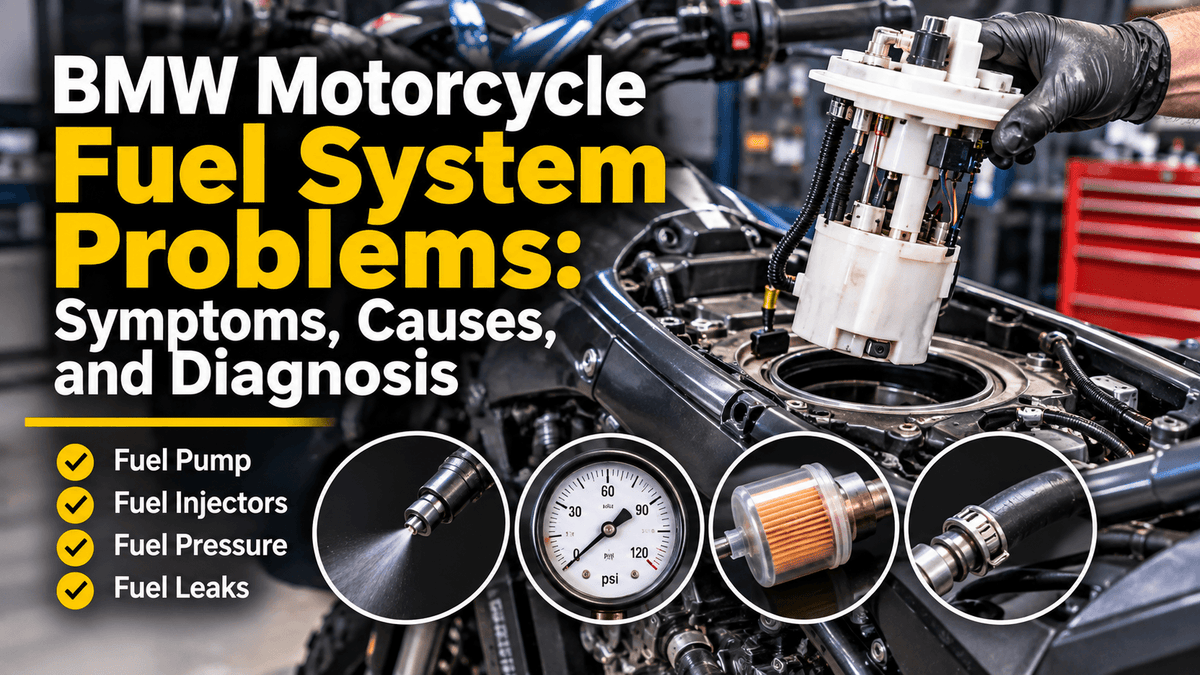
Your BMW motorcycle starts normally one day, then struggles to fire up the next. Maybe the engine idles unevenly, hesitates when you open the throttle, or suddenly loses power on the road. Sometimes, it starts and runs for a few seconds before stalling.
These symptoms can point to a fuel delivery problem. But the fuel pump is not always to blame.
BMW motorcycle fuel system problems can involve the fuel pump, injectors, fuel pressure, filters, electrical connections, or engine management system. Several of these faults produce similar symptoms, which makes accurate diagnosis important.
In this guide, we'll look at how the fuel system works, the warning signs to watch for, and the most common causes of fuel-related running problems. You'll also learn how to approach basic diagnostics, when professional testing is necessary, and why some BMW fuel pump faults require a software update rather than a replacement part.
1. How Does a BMW Motorcycle Fuel System Work?
Most modern BMW motorcycles use electronic fuel injection. Instead of relying on a carburetor to meter fuel mechanically, the system uses an electric pump, injectors, sensors, and an engine control unit to deliver fuel under controlled conditions.
The exact arrangement varies by model and year, but the main components perform similar functions.
The Role of the Fuel Pump
The fuel pump moves gasoline from the tank into the fuel delivery system. It must provide adequate flow and pressure for the engine to operate correctly.
On many fuel-injected BMW motorcycles, the pump is electrically powered and installed inside or as part of the fuel tank assembly. Its operation is managed by the motorcycle's electrical and engine control systems.
A pump that cannot deliver enough fuel may cause hard starting, hesitation, or stalling. However, a pump-related fault code does not always mean the pump itself has failed.
Fuel Filters and Fuel Lines
Fuel filters help prevent dirt and other contaminants from reaching sensitive components such as the injectors.
Fuel lines carry gasoline between the tank and the engine. Their condition matters just as much as the pump itself. A restricted filter, damaged line, leaking connection, or electrical problem can interfere with fuel delivery.
Filter location and serviceability differ between BMW models. Some designs incorporate filtration into the fuel pump assembly, while others use different arrangements.
How Fuel Injectors Deliver Fuel
Fuel injectors meter and spray fuel into the engine's intake system or combustion chamber, depending on the engine design.
The engine control unit determines when and how long the injectors operate. This helps the engine maintain an appropriate air-fuel mixture under different conditions, from cold starts to higher engine loads.
If an injector becomes restricted, leaks, or fails electrically, fuel delivery may become inconsistent. The result can be rough idling, hesitation, poor performance, or difficulty starting.
The Role of the ECU and Fuel Sensors
The engine control unit (ECU) uses information from multiple sensors to manage fuel injection and engine operation.
Depending on the model, this information may include engine speed, throttle position, intake air conditions, engine temperature, and oxygen sensor readings.
Not every fuel-related problem is mechanical. A wiring fault, sensor issue, control-unit problem, or software-related condition can produce symptoms that resemble a failing fuel pump.
2. Common Symptoms of BMW Motorcycle Fuel System Problems
Fuel delivery problems can develop gradually or appear without much warning. The symptoms below are useful starting points when deciding what to investigate.
1. Hard Starting or Failure to Start
A BMW motorcycle that cranks normally but takes unusually long to start may have a fuel delivery problem.
You might notice that the engine needs several attempts before it fires, or that it starts more easily after the motorcycle has been sitting for a while. In more serious cases, the engine may crank but fail to start at all.
Possible fuel-related causes include:
-
Insufficient fuel pressure.
-
A fuel pump that is not operating correctly.
-
Restricted fuel flow.
-
An injector that is clogged or malfunctioning.
-
A fault in the fuel pump's electrical supply or control circuit.
There are other possibilities, too. A weak battery, ignition problem, or faulty sensor can produce similar starting symptoms. The first step is to identify whether the engine is actually receiving the fuel and ignition it needs.
2. Engine Stalling While Riding
Unexpected stalling is one of the more concerning BMW motorcycle fuel system symptoms.
The engine may cut out during acceleration, lose power at steady speed, or stall when coming to a stop. Some motorcycles restart immediately. Others may need time before they run normally again.
An interrupted fuel supply can cause this behavior. Potential causes include a failing fuel pump, an electrical connection that loses contact, insufficient fuel pressure, or a fuel pump control problem.
Pay attention to the conditions under which the engine stalls. Does it happen when the engine is hot? Under heavy acceleration? After riding for a long period?
These details can help a technician narrow down the cause.
3. Loss of Power or Hesitation During Acceleration
A motorcycle needs sufficient fuel delivery when engine demand increases.
If the fuel system cannot maintain the required supply, the engine may hesitate, sputter, or feel unusually weak when the throttle opens. The problem may be more noticeable during hard acceleration, hill climbing, or higher-speed riding.
Low fuel pressure, restricted fuel flow, or injector problems are possible causes.
Still, do not overlook the ignition and air intake systems. A misfiring engine, restricted air filter, or sensor fault can create very similar symptoms.
4. Rough Idle or Unstable Engine Performance
An unstable idle may show up as fluctuating RPM, excessive vibration, or an engine that struggles to remain running without throttle input.
Fuel injector contamination or uneven fuel delivery can contribute to rough idling. A fuel pressure problem may also affect low-speed engine operation.
However, rough idle is not exclusive to the fuel system. Intake leaks, throttle body issues, ignition faults, and engine sensor problems should also be considered.
If the engine runs smoothly at higher RPM but struggles at idle, record that behavior. It can be a useful clue during diagnosis.
5. Fuel Smell or Visible Fuel Leaks
A strong gasoline smell around the motorcycle deserves immediate attention, particularly when accompanied by visible wet spots near the fuel tank, pump assembly, or fuel lines.
Possible sources include damaged fuel hoses, loose connections, deteriorated seals, or cracks around the fuel pump flange.
A fuel leak is a safety issue, not simply a performance problem. Gasoline vapors can ignite easily. If you suspect an active leak, switch off the engine, stay away from ignition sources, and do not restart the motorcycle to investigate. Arrange professional inspection or recovery.
3. What Causes BMW Motorcycle Fuel System Problems?
Several different faults can affect fuel delivery. The following are among the areas worth investigating.
1. A Failing or Defective Fuel Pump
The fuel pump is responsible for supplying gasoline to the engine at the required pressure and flow rate.
A worn or defective pump may struggle to maintain adequate fuel delivery. Depending on the severity of the fault, the motorcycle may develop starting problems, hesitation, loss of power, or intermittent stalling.
Electrical problems can create similar symptoms. A damaged connector, poor ground, fuse issue, or control-circuit fault may prevent the pump from operating as intended, even when the pump itself is still functional.
One important BMW-specific example comes from Service Information Bulletin 16 03 23.
BMW Motorrad USA documented a fuel pump self-diagnosis issue affecting certain motorcycles equipped with BMS-MP and BMS-O engine control units, including specified R 1250 and S 1000 RR models. Under certain conditions, an incorrect self-diagnosis parameter setting could cause the fuel pump to shut off and the motorcycle to enter emergency operation mode.
BMW's corrective action was a control-unit software update. The bulletin specifically states that replacing the fuel pump unit would not solve this particular problem.
This is a useful reminder: a fuel pump fault code does not automatically prove that the fuel pump hardware is defective.
2. Low Fuel Pressure or Restricted Fuel Flow
The fuel system must maintain the pressure and flow required by the engine.
If pressure drops below the model's specification, the engine may receive insufficient fuel, particularly under higher load. A restricted filter, damaged line, failing pump, or related component may contribute to the problem.
Possible symptoms include hard starting, hesitation, unstable running, and loss of power during acceleration.
Fuel pressure cannot be judged reliably from engine behavior alone. It needs to be measured using the correct equipment and the test procedure specified for the motorcycle.
3. Clogged or Poorly Performing Fuel Injectors
Fuel injectors have small, carefully designed openings. Deposits or contamination can interfere with their spray pattern and fuel delivery.
Depending on the severity, an injector problem may produce:
-
Rough or uneven idling.
-
Hesitation during acceleration.
-
Poor throttle response.
-
Misfires or uneven engine performance.
-
Difficulty starting.
An injector can also develop an electrical fault or fail to seal correctly. Cleaning is not a universal solution. A technician may need to perform an injector balance, flow, or electrical test to determine whether cleaning, repair, or replacement is appropriate.
4. Fuel Pressure Regulator or Electrical Control Issues
Not every BMW motorcycle uses the same fuel pressure regulation arrangement. The regulator may be integrated into a larger assembly or positioned differently depending on the model.
Where fitted, a regulator fault can affect fuel pressure and engine performance.
Electrical issues deserve equal attention. Wiring damage, loose connectors, poor grounds, blown fuses, or problems in the fuel pump control circuit can interrupt fuel delivery.
The BMW SIB 16 03 23 example is particularly relevant here. It demonstrates that a software-related control issue can create fuel pump warnings and emergency operation behavior without requiring replacement of the physical pump.
Before installing a new component, confirm what the fault actually indicates.
5. Poor Fuel Quality or Fuel Contamination
Fuel quality can affect engine performance, particularly when gasoline has been stored for an extended period or contaminated by water or debris.
Old or contaminated fuel may contribute to difficult starting, rough running, and inconsistent combustion. Deposits can also affect fuel injectors over time.
BMW's U.S. warranty documentation has discussed how fuel quality and inadequate detergent performance can contribute to deposits and driveability concerns.
Use fuel that meets the requirements in the owner's manual. Do not assume that every BMW motorcycle has the same octane or ethanol requirements. Those specifications can vary by model and market.
4. How to Diagnose BMW Motorcycle Fuel System Problems
Replacing the fuel pump or injectors without confirming the fault can waste money and leave the original problem unresolved.
A structured diagnosis is more effective.
Step 1 — Check the Fuel Level and Basic Conditions
Start with the obvious checks.
Confirm that the tank contains sufficient fuel and that the motorcycle is using gasoline appropriate for the model. If the bike has been sitting for a long time, consider whether fuel age or contamination could be contributing to the symptoms.
Record when the problem occurs:
-
During a cold start.
-
After the engine warms up.
-
Under hard acceleration.
-
At idle or low speed.
-
After a longer period of riding.
Also check for visible fuel leaks. If gasoline is leaking, stop the inspection and arrange professional service. Do not start the engine to reproduce the fault.
Step 2 — Inspect the Fuel Pump and Electrical Connections
If no leak is present, inspect accessible electrical connections around the fuel pump and related circuits.
Look for loose connectors, damaged wiring, corrosion, or signs of overheating. Check the relevant fuses using the correct wiring diagram and owner's manual.
The fuel pump's operating sound may provide an initial clue, but it is not a reliable pass-or-fail test. Some pump designs operate differently, and hearing the pump does not confirm that it produces the required pressure.
Fuel tank removal and electrical testing around gasoline components should be left to someone familiar with the correct safety procedures.
Step 3 — Read Diagnostic Trouble Codes
A compatible motorcycle diagnostic scanner can help retrieve fault codes from supported electronic systems.
Depending on the model and scanner coverage, it may provide information about:
-
Fuel pump electrical circuits.
-
Engine management faults.
-
Sensor readings.
-
Related control-unit warnings.
-
Stored or intermittent faults.
Read the codes before clearing them. Record the fault descriptions and any available freeze-frame or operating-condition data.
A code is a diagnostic starting point, not a final diagnosis. BMW's fuel pump software bulletin is a good example of why this distinction matters: the recorded faults did not mean that replacing the pump would correct the underlying issue.
Likewise, the absence of a stored code does not rule out a mechanical fuel delivery problem.
Step 4 — Perform a Fuel Pressure and Flow Test
If the symptoms and initial checks point toward insufficient fuel delivery, a fuel pressure test may be necessary.
A suitable gauge and the correct model-specific procedure are required. The test may involve checking pressure under specified operating conditions and comparing the results with BMW's service specifications.
The results can help determine whether the pump and fuel delivery circuit are supplying the engine correctly.
There is no single fuel pressure value that applies to every BMW motorcycle. Do not use a generic PSI figure from another model as a pass-or-fail standard.
Fuel systems can retain pressure after the engine is switched off. Opening a pressurized fuel line without the correct procedure can cause gasoline to spray and create a serious fire hazard. This work is best handled by a qualified technician.
Step 5 — Inspect the Fuel Injectors and Related Systems
If fuel pressure and supply are within specification, the next step is to investigate the injectors and other systems that affect engine operation.
Depending on the findings, a technician may check injector electrical operation, spray pattern, flow balance, and leakage.
It is also important to check the intake system, throttle bodies, ignition components, and relevant sensors. An engine that runs rough does not necessarily have a fuel system fault.
The objective is to identify the actual cause rather than replacing several parts until the symptom disappears.
5. BMW Motorcycle Fuel System Maintenance
Good maintenance cannot prevent every fuel system failure, but it can reduce avoidable problems and help identify issues before they become more serious.
Use the Correct Fuel for Your Motorcycle
Follow the fuel recommendations in the owner's manual for your exact model and market.
Pay attention to the specified octane rating. In the United States, gasoline is generally labeled using the Anti-Knock Index (AKI), while other markets may use Research Octane Number (RON). These figures are not interchangeable.
Ethanol compatibility also matters. Do not assume that every BMW motorcycle can use the same gasoline blend. Check the manufacturer's specifications before using fuel with a higher ethanol content.
Keep the Fuel System Clean
Use fresh, clean gasoline from a reputable source.
If your motorcycle develops symptoms that suggest injector contamination, have the system tested before purchasing cleaning products or arranging an injector service. A fuel additive may help with certain deposits, but it will not repair a failing pump, damaged wiring, or a leaking fuel line.
Follow the manufacturer's maintenance recommendations for any serviceable fuel filters. On some motorcycles, filtration is integrated into the pump assembly rather than being a routine standalone replacement item.
Maintain the Fuel System During Long-Term Storage
If the motorcycle will be parked for an extended period, follow the storage instructions in the owner's manual.
Fuel storage procedures differ between modern fuel-injected motorcycles and older carbureted models. A procedure intended for a carburetor should not automatically be applied to a modern BMW injection system.
For older carbureted motorcycles, fuel left sitting in the system may deteriorate and contribute to blocked jets or fuel passages. Modern fuel-injected models have different components and maintenance requirements.
When in doubt, use the storage guidance for the exact motorcycle rather than relying on a generic recommendation.
6. When Should You Stop Riding and Seek Professional Help?
Some fuel system issues can be diagnosed during routine service. Others call for immediate action.
Stop riding and arrange professional inspection if you notice:
-
A visible fuel leak around the tank, fuel pump, or fuel lines.
-
A persistent gasoline smell that suggests fuel is escaping.
-
Repeated engine stalling while riding.
-
Sudden or severe loss of power.
-
An engine that repeatedly shuts down or enters emergency operation mode.
-
Damaged fuel lines or electrical components near the fuel system.
Fuel is highly flammable. If you suspect a leak, switch off the engine when safe, avoid sparks and open flames, and do not attempt to restart the motorcycle to test it.
If the motorcycle stalls repeatedly or cannot maintain normal power, do not continue riding in the hope that the problem will disappear. Arrange recovery and have the fault diagnosed properly.
7. Frequently Asked Questions
How Do I Know If My BMW Motorcycle Fuel Pump Is Failing?
Common warning signs include hard starting, intermittent stalling, hesitation, and loss of power. However, these symptoms can also result from electrical faults, low fuel pressure, ignition problems, or sensor issues. A proper diagnosis should include checking the pump's electrical supply and measuring fuel pressure according to the model-specific service procedure.
Why Does My BMW Motorcycle Start and Then Stall?
A motorcycle that starts and immediately stalls may have insufficient fuel delivery, an unstable fuel pressure supply, or a problem with engine management. Intake leaks, throttle body issues, and ignition faults can produce similar behavior. Record whether the problem occurs only during cold starts or continues after the engine warms up. That information can help narrow down the cause.
Can a Bad Fuel Pump Cause Loss of Power?
Yes. If a fuel pump cannot maintain the required fuel flow and pressure, the engine may struggle under acceleration or higher load. The motorcycle may hesitate, sputter, or lose power. However, similar symptoms can come from restricted injectors, ignition faults, or air intake problems, so fuel pressure should be tested before replacing the pump.
Can a Diagnostic Scanner Identify Fuel Pump Problems?
A compatible motorcycle diagnostic scanner may retrieve fuel pump-related fault codes and information from supported control units. It can help narrow down the problem, but it cannot confirm every mechanical fuel system fault. Fuel pressure, electrical supply, and injector operation may still need to be tested separately.
Is It Safe to Ride a BMW Motorcycle With a Fuel Leak?
No. A fuel leak creates a fire hazard, especially around a hot engine or exhaust system. Switch off the engine when safe, stay away from ignition sources, and do not restart the motorcycle. Arrange professional inspection or recovery before riding again.
8. Conclusion: Keep Your BMW Motorcycle Fuel System in Good Condition
BMW motorcycle fuel system problems can involve the fuel pump, injectors, filters, pressure regulation, electrical connections, or engine management software. The symptoms often overlap, so replacing parts based on guesswork is rarely the best approach.
Start with the basic checks, read any stored fault codes, and use model-specific fuel pressure specifications when further testing is required. A diagnostic scanner can provide useful information, but it does not replace mechanical and electrical testing.
Keep up with the maintenance requirements for your motorcycle. And when fuel leakage or repeated stalling occurs, put safety first.
Disclaimer
The information in this article is provided for general educational and informational purposes only. BMW motorcycle fuel system designs, fuel requirements, pressure specifications, and repair procedures vary by model and year. This article is not a substitute for the official BMW Motorrad owner's manual, service documentation, or professional mechanical advice.
Fuel system inspection and repair can involve pressurized gasoline and highly flammable vapors. Improper handling may result in fire, personal injury, or motorcycle damage. Do not open fuel lines, perform pressure tests, or attempt repairs unless you have the appropriate tools, training, and safety equipment.
Always verify the correct procedures and specifications for your motorcycle before performing maintenance. If you suspect a fuel leak or are unsure about the source of a fuel system problem, stop riding and consult a qualified BMW Motorrad technician. Check your motorcycle's VIN for applicable safety recalls through BMW Motorrad or the National Highway Traffic Safety Administration (NHTSA).
References
-
BMW Motorrad USA – SIB 16 03 23: Service Solution, Fuel Pump Faults
-
BMW Motorrad USA – SIB 16 01 14: Recall 13V-617, Fuel Pump Unit / Additional Fuel Pump Unit
Technical note: The BMW service bulletin and recall examples in this article apply only to the models and vehicles identified in the original documents. Always verify applicability by VIN and consult the latest documentation for your specific motorcycle.