
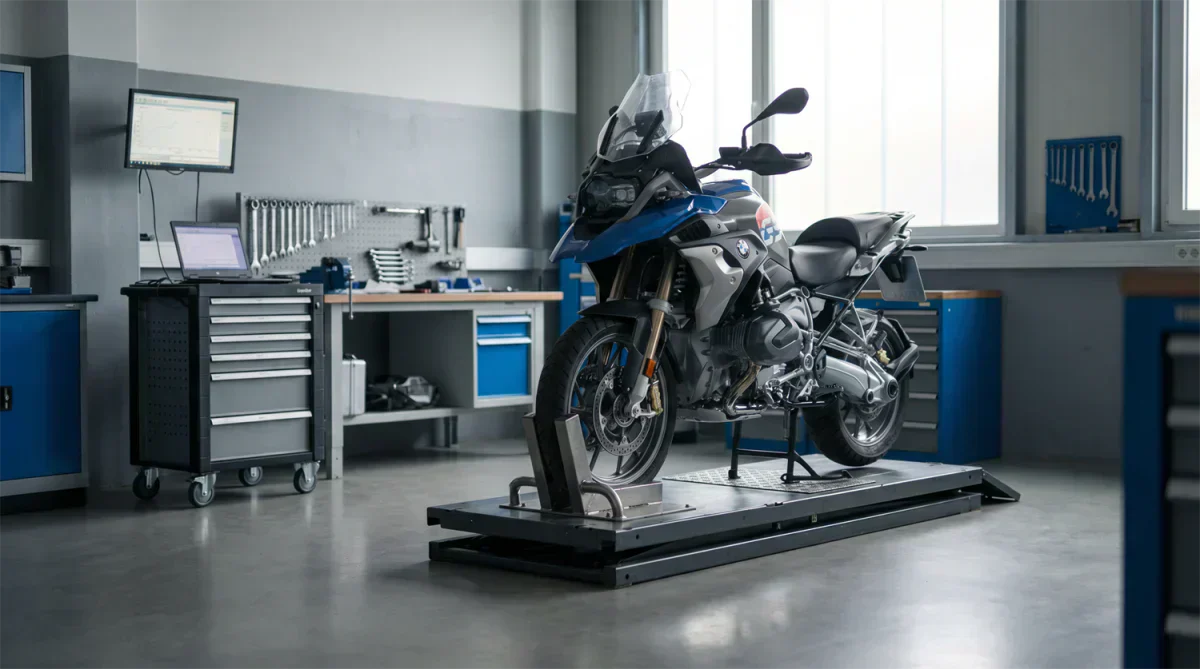
If your BMW motorcycle has started idling rough, hesitating when you twist the throttle, or behaving strangely after a battery replacement, you’re not alone. These symptoms often point to how the engine control unit (ECU) is managing air, fuel, and throttle response. Two terms come up again and again in this context: throttle body relearn and adaptation reset.
They sound similar, but they solve different problems. Understanding the difference can save you time, prevent unnecessary repairs, and help you restore your bike’s performance more effectively.
What Is Throttle Body Relearn?
Throttle body relearn is the process of recalibrating how the ECU interprets the position of the throttle plate. Modern BMW motorcycles rely on electronic throttle control, meaning the ECU needs precise reference points to manage idle speed and throttle response.
Over time—or after maintenance like cleaning or replacing the throttle body—these reference points can drift. When that happens, the ECU may misjudge how much air is entering the engine. The result? Rough idle, inconsistent RPM, or delayed throttle response.
A relearn procedure allows the ECU to “relearn” the correct throttle positions. In many cases, this can be done without specialized tools, depending on the model. It’s typically recommended after:
- Throttle body cleaning
- Throttle body replacement
- Idle instability issues
Think of it as recalibrating a sensor so the system can read inputs accurately again.
What Is Adaptation Reset?
Adaptation reset goes a step further. Instead of recalibrating a single component, it clears the ECU’s stored learning data across multiple systems.
BMW motorcycles continuously adapt to your riding style, fuel quality, and environmental conditions. This includes adjustments to fuel trims, throttle sensitivity, and even shifting behavior (on certain models). These learned values improve performance over time—but they can also become inaccurate after repairs or major changes.
Resetting adaptation values wipes this learned data, forcing the ECU to start fresh and rebuild its calculations from scratch.
Common situations where an adaptation reset is useful include:
- After disconnecting or replacing the battery
- After engine or sensor repairs
- When performance feels inconsistent despite no fault codes
After a reset, the bike may feel slightly different at first. That’s normal—the ECU is relearning based on real-time data again.
Throttle Relearn vs. Adaptation Reset
Here’s where many riders get confused. While both processes involve ECU behavior, their scope is very different.
- Throttle relearn focuses on one system: throttle position calibration
- Adaptation reset affects the entire ECU learning system
Throttle relearn is more targeted and often used to fix specific issues like unstable idle. Adaptation reset is broader and is typically used when multiple performance issues appear or after major changes.
In simple terms:
- Relearn = recalibrate
- Reset = erase and relearn everything
When Should You Use Each?
Choosing the right approach depends on the symptoms you’re experiencing.
If your motorcycle has a rough or unstable idle, especially after cleaning the throttle body, a throttle relearn is usually the first step.
If you notice throttle hesitation or jerky acceleration, the issue may involve both calibration and learned data. In that case, a combination of relearn and reset may be necessary.
After a battery disconnect or replacement, an adaptation reset is often recommended. The ECU may lose reference data or behave unpredictably without a reset.
Following repairs or part replacements, especially sensors or intake components, resetting adaptation values ensures the ECU isn’t relying on outdated data.
Common Mistakes to Avoid
One of the most common mistakes is assuming these two procedures are interchangeable. They’re not. Using the wrong one can leave the underlying issue unresolved.
Another mistake is skipping the relearning phase after a reset. Once adaptation values are cleared, the ECU needs time—and proper driving conditions—to rebuild accurate data. Immediate performance may not reflect the final result.
Using a basic scan tool that doesn’t support advanced functions is another limitation. Not all OBD2 scanners can perform adaptation resets, especially on BMW motorcycles.
Finally, keep in mind that procedures can vary by model and year. Always verify compatibility before attempting any reset or relearn process.
Choosing the Right Tool
While some throttle relearn procedures can be done manually, adaptation resets typically require a diagnostic tool with bi-directional control.
For BMW motorcycle owners, using a scanner designed for advanced functions makes a significant difference. Tools like the CGSULIT SC530 Pro is built to access ECU-level features, including adaptation reset functions. More importantly, they’re designed with DIY users in mind—so you don’t need dealership-level experience to perform these tasks.

A capable scanner doesn’t just reset values; it helps you understand what’s happening inside your bike’s control system.
FAQ
Is throttle relearn the same as adaptation reset?
No. Throttle relearn recalibrates throttle position, while adaptation reset clears all learned ECU data.
Do I need to perform both procedures?
In some cases, yes—especially after repairs or when multiple symptoms are present.
Can I reset adaptation values without a scanner?
In most cases, no. A diagnostic tool is required to access this function.
What happens if I don’t reset adaptation values?
The ECU may continue using outdated data, which can affect performance and efficiency.
References
This article is based on general engine management principles and service practices referenced by organizations such as BMW Motorrad, Bosch, SAE International, and Haynes Manuals.
Final Thoughts
Throttle body relearn and adaptation reset are often mentioned together, but they serve different purposes. Knowing when to use each can help you diagnose issues more accurately and avoid unnecessary guesswork.
If your BMW motorcycle isn’t running the way it should, start by identifying the symptom—then choose the right approach. And when deeper system access is needed, using a reliable diagnostic tool ensures the job is done correctly the first time.
Related Articles
Top BMW Motorrad Error Codes: What They Mean and How to Fix Them
Guide to Bleed ABS Brake on a BMW Motorcycle with OBD2 Scanner 2026
How to Reset BMW Motorcycle Service Light with OBD2 Scanner?
BMW Motorrad Spring Prep 2026: 7 Essential Checks Before Your First Ride