
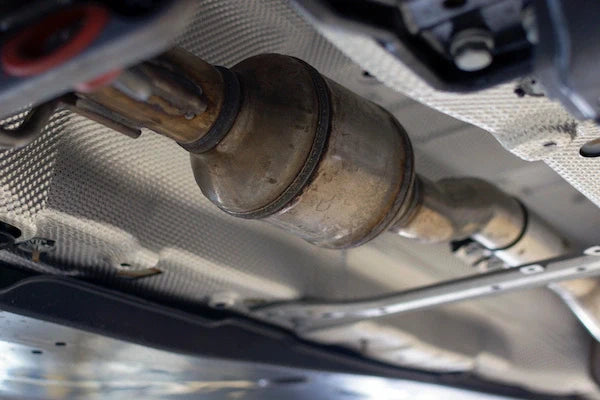
A failing catalytic converter rarely announces itself in obvious ways. In fact, many drivers continue operating their vehicles for weeks—or even months—without realizing the converter is the real problem. The symptoms are subtle at first. A slight loss of power. A strange smell. Maybe a check engine light that comes and goes.
Then one day, the car struggles to accelerate uphill. The engine runs hot. Fuel economy tanks. And suddenly, what seemed like a minor issue turns into an expensive repair—or worse, engine damage.
This guide breaks down every major symptom of a bad catalytic converter, explains why those symptoms often mimic other engine problems, and—most importantly—details the real driving risks of ignoring converter failure.
If you’ve noticed performance issues, odd exhaust smells, or recurring trouble codes like P0420, this article will help you understand what’s happening under your vehicle and what to do next.
What Does a Catalytic Converter Actually Do?
Before diving into symptoms, it helps to understand the catalytic converter’s role in modern vehicles.
The catalytic converter sits in the exhaust system, usually between the exhaust manifold and muffler. Its job is not performance—it’s chemistry.
Inside the converter is a ceramic or metallic honeycomb coated with precious metals like platinum, palladium, and rhodium. As exhaust gases pass through, these metals trigger chemical reactions that convert harmful pollutants—carbon monoxide, hydrocarbons, and nitrogen oxides—into less harmful gases.
When the converter is healthy, this process is seamless and invisible to the driver.
When it starts to fail, everything downstream suffers.
1. Loss of Engine Power (Especially Under Load)
One of the earliest and most common symptoms of a bad catalytic converter is a noticeable loss of power.
At first, it’s subtle. The car feels a bit sluggish pulling away from a stop. Acceleration feels delayed. You press the gas pedal harder than usual.
Over time, the problem becomes impossible to ignore.
-
Struggling to accelerate uphill
-
Poor highway passing power
-
Engine feels “choked” at higher RPMs
This happens because a clogged or melted converter restricts exhaust flow. The engine can’t expel exhaust gases efficiently, which reduces combustion efficiency. It’s like trying to breathe through a blocked airway.
Why it mimics other problems:
These symptoms are often mistaken for bad spark plugs, failing ignition coils, fuel delivery issues, or even transmission problems.
2. Poor Acceleration That Comes and Goes
A failing catalytic converter doesn’t always behave consistently.
Many drivers report intermittent power loss, where the car feels fine one moment and sluggish the next. This is especially common when the converter is partially clogged rather than fully blocked.
Heat plays a role here. As exhaust temperatures rise, internal materials can expand, worsening restriction. When the system cools, performance may temporarily improve.
This on-again, off-again behavior leads many owners down the wrong diagnostic path.
3. Rotten Egg or Sulfur Smell From the Exhaust
A strong sulfur or rotten egg odor is a classic sign of catalytic converter trouble.
Normally, the converter processes hydrogen sulfide (a byproduct of combustion) into sulfur dioxide, which is mostly odorless. When the converter fails, this chemical reaction becomes incomplete.
The result? A smell that’s unmistakable and unpleasant.
-
Strongest during acceleration
-
Often noticeable after short trips
-
May worsen as the converter deteriorates
While a brief sulfur smell can occur under heavy load, persistent odor is not normal and should never be ignored.
4. Check Engine Light (Especially P0420 or P0430)
The check engine light is often the first official warning sign.
Common catalytic converter–related trouble codes include:
-
P0420 – Catalyst System Efficiency Below Threshold (Bank 1)
-
P0430 – Catalyst System Efficiency Below Threshold (Bank 2)
These codes indicate that downstream oxygen sensor readings are too similar to upstream readings—meaning the converter isn’t doing its job.
However, these codes don’t always mean the converter itself is bad. That’s where confusion starts.
Why it mimics other problems:
Faulty oxygen sensors, exhaust leaks, engine misfires, or fuel mixture issues can all trigger the same codes.
5. Engine Misfires and Rough Running
A clogged catalytic converter can cause misfires, particularly under load.
When exhaust gases can’t escape properly, they interfere with cylinder scavenging. This disrupts combustion timing and air-fuel balance, leading to:
-
Rough idle
-
Shaking during acceleration
-
Hesitation when pressing the gas
Over time, repeated misfires can damage the converter further, creating a destructive feedback loop.
6. Decreased Fuel Economy
Many drivers notice a gradual drop in gas mileage long before they suspect the catalytic converter.
As backpressure increases, the engine works harder to maintain performance. The ECU compensates by injecting more fuel, which reduces efficiency.
You may find yourself refueling more often, even though your driving habits haven’t changed.
7. Car Stalls or Struggles to Start
In more advanced stages of failure, a catalytic converter can become so restricted that the engine struggles to run at all.
Symptoms may include:
-
Engine stalls at idle
-
Difficulty starting after warming up
-
Engine starts, then immediately dies
This is particularly common after highway driving, when exhaust temperatures are highest.
8. Excessive Heat Under the Vehicle
A failing catalytic converter often runs much hotter than normal.
In severe cases, the converter may glow red, especially at night. This isn’t just a warning sign—it’s a serious safety risk.
Excessive heat can:
-
Damage nearby components
-
Melt exhaust parts
-
Increase fire risk
If you ever smell burning or notice extreme heat under the vehicle, stop driving immediately.
9. Rattling Noise From Under the Car
Inside the converter, the honeycomb structure can crack or break apart.
When this happens, you may hear:
-
Rattling noises during startup
-
Metallic sounds when accelerating
-
Noise from underneath the center of the car
This is often mistaken for a loose heat shield, but internal converter damage is a common cause.
10. Failed Emissions Test
In states that require emissions testing, a failing catalytic converter almost always results in failure.
Even if the car seems to drive “fine,” emissions data doesn’t lie. High levels of hydrocarbons, carbon monoxide, or NOx indicate converter inefficiency.
Why Bad Catalytic Converter Symptoms Mimic Other Problems
One of the most frustrating aspects of catalytic converter failure is how convincingly it imitates other issues.
Here’s why:
-
Shared symptoms: Loss of power, misfires, rough idle
-
Shared codes: P0420 can be triggered by multiple faults
-
Delayed onset: Problems worsen gradually
-
ECU compensation: Masks early signs
This is why many converters are replaced unnecessarily—or overlooked entirely.
Driving Risks of a Bad Catalytic Converter
Driving with a failing catalytic converter isn’t just inefficient. It’s risky.
1. Engine Damage
Excessive backpressure increases cylinder temperatures. Over time, this can damage valves, pistons, and head gaskets.
2. Fire Hazard
Overheating converters can ignite dry grass, debris, or underbody materials.
3. Breakdown Risk
Severe restriction can cause sudden power loss, leaving you stranded.
4. Legal and Environmental Issues
Driving with a failed converter may violate emissions laws and increase pollution.
Can You Drive With a Bad Catalytic Converter?
Technically, yes—for a short time.
But it’s not advisable.
If symptoms are mild and intermittent, short trips may be possible. However, continued driving increases the risk of secondary damage and higher repair costs.
Once severe symptoms appear, driving should stop.
Common Causes of Catalytic Converter Failure
Understanding why converters fail helps prevent repeat issues.
-
Engine misfires
-
Rich fuel mixtures
-
Oil or coolant burning
-
Physical damage
-
Age and heat cycles
Replacing a converter without fixing the root cause often leads to another failure.
How Long Does a Catalytic Converter Last?
Most converters last 100,000 to 150,000 miles under normal conditions.
However, poor maintenance, ignition problems, or oil consumption can drastically shorten lifespan.
Repair vs Replacement: What Are Your Options?
In most cases, replacement is the only reliable solution.
“Cleaning” a clogged converter rarely works long-term and may violate emissions laws.
Cost varies widely depending on vehicle, location, and whether OEM or aftermarket parts are used.
Frequently Asked Questions (FAQ)
Can a bad catalytic converter cause a car not to start?
Yes, in severe cases where exhaust flow is heavily restricted.
Will a catalytic converter fix itself?
No. Once damaged, it does not recover.
Can bad spark plugs damage a catalytic converter?
Absolutely. Misfires dump raw fuel into the exhaust, overheating the converter.
Is it safe to drive long distances with a bad converter?
No. Long trips increase heat buildup and risk of failure.
Final Thoughts: Don’t Ignore the Warning Signs
A bad catalytic converter doesn’t fail quietly—but it does fail gradually.
By the time symptoms are obvious, damage may already be done.
If you notice power loss, unusual smells, recurring engine codes, or excessive heat, don’t ignore them. Early diagnosis saves money, protects your engine, and keeps you safe on the road.
Understanding the symptoms—and the risks—puts you back in control.