
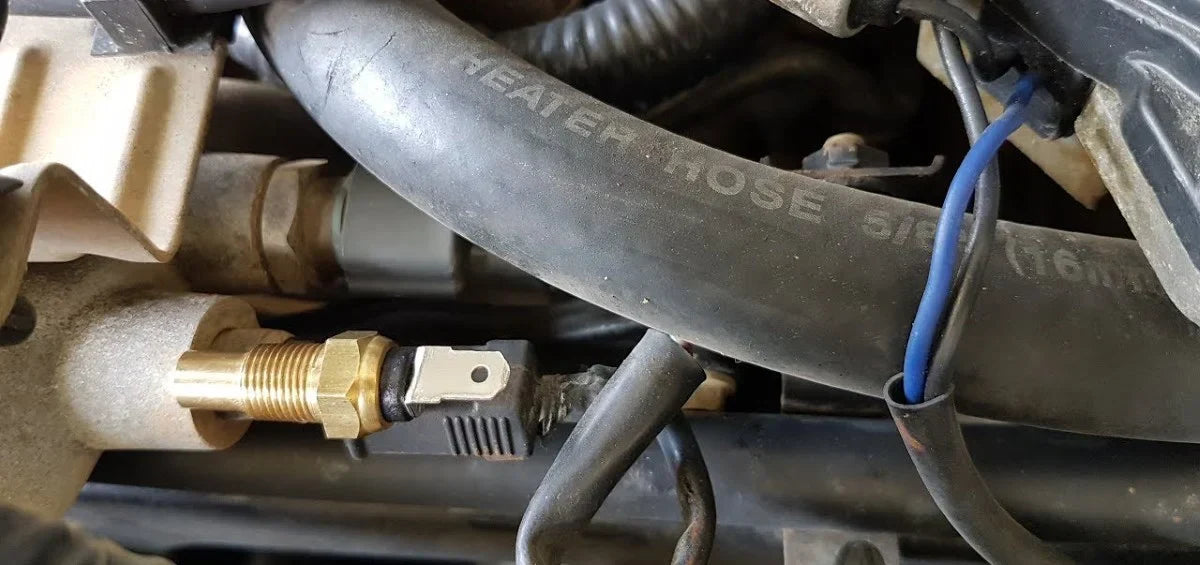
When your car suddenly begins to burn more fuel, idle roughly, or throw a confusing check-engine light, the coolant temperature sensor is probably not the first thing you suspect. Most drivers think of spark plugs, injectors, vacuum leaks, or even a failing thermostat. But here’s something many people don’t realize: a faulty Engine Coolant Temperature (ECT) Sensor can mimic half a dozen other engine problems, making it one of the most commonly misdiagnosed issues on modern vehicles.
And because this tiny sensor controls critical decisions your ECU makes—including air-fuel mixture, ignition timing, fan operation, and cold-start enrichment—a bad ECT sensor can quickly snowball into much larger (and more expensive) problems.
In this guide, you’ll learn the real-world symptoms of a bad coolant temperature sensor, why it fails, how it affects your engine, and how drivers often identify the problem too late. We’ll also include a detailed Q&A section at the end to answer highly searched questions from U.S. drivers.
Let’s dive in.
What Does a Coolant Temperature Sensor Actually Do?
If you’re new to engine electronics, the coolant temperature sensor might look like just another plug sticking out of the engine. But its job is far more critical.
The ECT sensor constantly measures temperature inside the engine’s coolant passages and reports that information back to the ECU. Based on this temperature, the ECU makes dozens of decisions every second:
-
How much fuel to inject
-
When to adjust timing
-
When to turn radiator fans on/off
-
How rich the mixture should be at startup
-
Whether the engine is at safe operating temperature
-
When to activate closed-loop operation
In simple terms, the coolant sensor is like the thermostat of your engine’s brain. When it lies, the ECU makes wrong decisions—often dramatically wrong.
Why Do Coolant Temperature Sensors Go Bad?
Like any electronic component exposed to heat cycles, the ECT sensor can degrade over time. Common reasons include:
✔ Heat fatigue from years of extreme temperatures
✔ Corrosion caused by contaminated or old coolant
✔ Cracked sensor tip
✔ Internal electrical failure
✔ Damaged wiring or loose connectors
✔ Coolant leaks entering the connector
Most sensors begin showing symptoms around 80,000–100,000 miles, though some fail much earlier if coolant maintenance is neglected.
14 Common Symptoms of a Bad Coolant Temperature Sensor
Below is a practical breakdown of the symptoms drivers most frequently report. Some are obvious. Others are more subtle. But all can point back to the same silent culprit—the ECT sensor.
1. Poor Fuel Economy
This is one of the most frequent and most expensive symptoms.
If the sensor falsely reports cold temperatures, the ECU dumps extra fuel into the engine because it thinks the engine is still warming up. You might go from 26 MPG to 18 MPG seemingly overnight.
Many people blame “winter gas,” clogged injectors, or bad O2 sensors—never suspecting a $20 coolant sensor.
2. Black Smoke from the Exhaust
Too much fuel entering the cylinders causes incomplete combustion. That extra fuel burns in the exhaust, producing thick, dark smoke.
This is often mistaken for injector issues, but a failing ECT sensor can trigger the exact same condition.
3. Hard Cold Starts
When a sensor sends the wrong temperature signal, the ECU may not enrich the mixture correctly for cold weather.
-
Too little fuel → long crank, may stall
-
Too much fuel → engine floods, won’t start
Many “no start in the morning” cases trace back to incorrect coolant temp data.
4. Rough or Unstable Idle
Every second your engine idles, the ECU makes tiny adjustments based on engine temperature. If temperature data is wrong, those adjustments become wrong too, and idle becomes:
-
Shaky
-
Hunting up and down
-
Randomly rising
-
Occasionally dropping dangerously low
Most drivers first suspect IAC valves or vacuum leaks—but temperature data plays a larger role than they think.
5. Overheating or Cooling Fans Not Turning On
This is a big one.
Many cars rely on the coolant temp sensor to control radiator fans. If the sensor never tells the ECU “the engine is hot,” the fans simply never activate—leading to sudden overheating even with a perfectly healthy cooling system.
6. Illuminated Check Engine Light
A bad ECT sensor commonly triggers codes like:
-
P0115 – Coolant Temperature Sensor Malfunction
-
P0117 – Coolant Temp Sensor Low Input
-
P0118 – Coolant Temp Sensor High Input
-
P2185 / P2183 – Sensor 2 Circuit Codes
If your scanner shows any of these, the coolant temperature circuit is almost certainly involved.
7. High Idle RPM
When the ECU believes the engine is very cold, it increases idle speed to help with warmup. If the sensor gets stuck sending “cold” readings, the idle remains high even when fully warmed up.
8. Rich Running Condition
You may notice:
-
Strong fuel smell
-
Soot around the exhaust tip
-
Lazy throttle response
-
Decreased performance
This happens because the ECU injects more fuel than necessary when it thinks the engine is too cold.
9. Misfires (Especially on Start-Up)
Overly rich mixtures can cause spark plugs to foul. That leads to misfires during idle or acceleration.
A lot of people replace the plugs, coils, and injectors—before discovering the real problem was the sensor feeding false data.
10. Temperature Gauge Stays on “Cold”
If your dashboard needle never moves, or creeps up only slightly then drops back down, that’s a classic sign:
-
Open circuit
-
Dead ECT sensor
-
Broken connector
A stuck-on-cold gauge almost always points to a sensor or wiring problem.
11. Engine Lacks Power
With incorrect temperature inputs, the ECU may retard timing or overly enrich the mixture—both conditions rob the engine of torque and responsiveness.
Many describe this as “draggy acceleration” or “the car feels like it’s pulling a trailer.”
12. Poor Heater Performance
Some HVAC systems rely indirectly on coolant sensor data. If the ECU thinks the engine isn’t hot, it may prevent the heater from blowing warm air.
Drivers often mistake this for a heater core problem.
13. Engine Hesitation and Stumbling
During warmup, temperature data determines how quickly the ECU transitions from open loop to closed loop. Faulty readings delay this transition and cause hesitation during initial acceleration.
14. Erratic Temperature Readings in Live Data
If you scan the car and notice temperature readings jumping from 40°F to 200°F instantly, that’s a clear sign of a failing sensor or intermittent wiring.
How to Confirm the Problem: Simple Diagnostics
You don’t always need dealership equipment. Two easy tests:
1. OBD2 Live Data Check
If the reading shows:
-
−40°F (open circuit)
-
284°F (short circuit)
-
Or unstable jumping
→ The sensor is faulty.
2. Multi-meter Resistance Test
Compare resistance to your vehicle’s temperature-ohm chart.
If it doesn't match expected values → Replace the sensor.
⭐ FAQ: Bad Coolant Temperature Sensor Symptoms
Below are the top searched questions from U.S. drivers, answered clearly and concisely.
1. Can a bad coolant sensor cause rough idle?
Yes. Incorrect temperature data leads to incorrect air-fuel mixture, which destabilizes idle. It’s extremely common.
2. Can a bad coolant temp sensor cause no start?
Yes.
A rich mixture (too much fuel) or lean mixture (too little fuel) can both prevent the engine from starting.
3. Can a faulty coolant sensor cause overheating?
Indirectly, yes.
If the sensor never signals “hot,” the radiator fans won’t activate.
4. What are the main symptoms of a bad coolant sensor?
-
Rough idle
-
Black smoke
-
Hard starts
-
High fuel consumption
-
Overheating
-
Check engine light
-
Cooling fans not turning on
5. Will a bad coolant sensor trigger a check engine light?
Yes. Common codes include P0115, P0117, P0118, P2183, and P2185.
6. How do you test a coolant temp sensor?
Using either:
-
OBD2 scanner (live temperature data)
-
Multimeter (resistance check)
7. How long does a coolant sensor last?
Typically 80,000 to 100,000 miles.
8. Is it safe to drive with a bad coolant temperature sensor?
You can, but it's risky. It may cause overheating, poor fuel economy, or leave you stranded.
9. Can a bad coolant sensor affect the heater?
Yes. Incorrect temperature readings can delay or block heater operation.
10. How much does it cost to replace a coolant sensor?
In the U.S.:
-
Parts: $15–$65
-
Labor: $60–$120
Total: $80–$180.
11. Why does my gauge stay on cold?
Because the sensor isn’t sending a signal. It’s often a dead sensor or broken wiring.
12. Can a faulty coolant sensor cause misfires?
Indirectly, yes. A rich mixture can foul plugs, causing misfires.
13. What’s the difference between a thermostat and coolant sensor?
-
Thermostat controls coolant flow
-
Sensor reports temperature to the ECU
They work together but are not the same.
Final Thoughts
A bad coolant temperature sensor is one of those overlooked components that can create a chain reaction of engine issues—from rough idle and hard starts to overheating and poor fuel economy. The tricky part is that its symptoms often resemble other mechanical problems, leading many drivers to replace the wrong parts first.
The good news?
The sensor is cheap, relatively easy to replace, and diagnosing it is straightforward with the right tools.
If you’re noticing any of the symptoms in this guide, it’s worth checking the ECT sensor before diving into more expensive repairs.