
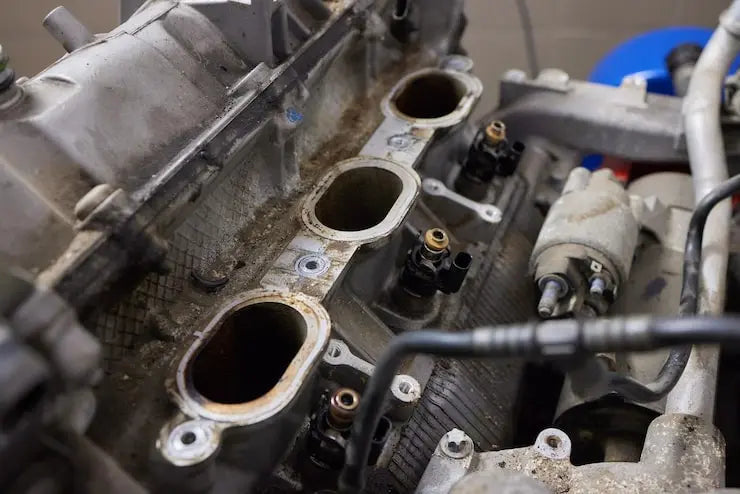
The intake manifold is one of those parts that rarely gets airtime in casual car talk, yet it quietly does a job that’s central to how your engine breathes and performs. When it starts to go wrong, the symptoms can range from barely noticeable to outright dangerous. Some signs look like other common problems, which is why many drivers (and even some mechanics) chase the wrong solutions for weeks. That wastes time. It costs money. Worse, it can put you and your vehicle at risk.
This guide walks you through the full spectrum of symptoms related to a bad or failing intake manifold. You’ll get plain-language explanations, clear examples of what the problem might feel or sound like, and guidance on which symptoms are urgent versus those you can monitor. No technical fluff. No tool-driven diagnostics. Just practical, experience-based insight you can use to decide your next step.
Quick overview: what the intake manifold actually does
Short version: it delivers air (and, on many engines, coolant) to the engine’s cylinders. The intake manifold sits between the throttle body and the cylinder head(s). Its geometry, runners, and sometimes variable runner control are designed to optimize airflow for power, torque, and fuel efficiency. On many modern engines the manifold also houses sensors, vacuum passages, and—on certain designs—coolant channels.
When an intake manifold or its gasket leaks, cracks, or the runner control system fails, the engine’s air-fuel mixture, idle behavior, and emissions are affected. The symptoms show up in performance, sounds, smells, and sometimes in the cooling system.
The top 15 signs of a bad intake manifold (high-confidence list)
Below are the most common, highest-value symptoms you’ll see when an intake manifold is failing. Each entry explains what you might notice, why it happens, and what other problems it can mimic.
1. Rough idle — the engine shakes or surges at stoplights
What you’ll feel: The car vibrates at idle. RPMs wobble. Sometimes the tach needle bounces up and down.
Why it happens: A leaking manifold or gasket allows extra air into the engine — air that isn’t measured by the intake air sensor. That disrupts the air-fuel ratio, which the engine struggles to correct at low RPM. The result is an uneven idle.
What it can mimic: Vacuum leaks, faulty idle air control devices, dirty throttle body, or ignition problems (spark plugs/coils).
2. Sudden or frequent misfires (especially one or more cylinders)
What you’ll feel: Stuttering during acceleration. A loss of smoothness. The engine coughs under load.
Why it happens: If a gasket leaks near a particular intake runner, the cylinder fed by that runner sees a lean mixture. That can cause a misfire, which may be intermittent or consistent depending on the size and location of the leak.
What it can mimic: Worn spark plugs, failing ignition coils, fuel injector problems, or compression issues.
3. Loss of power and sluggish acceleration
What you’ll experience: The car lacks pep when you press the accelerator. Passing on the highway feels slow. Acceleration comes with a delay.
Why it happens: Leaks, cracks, or internal runner problems prevent the engine from getting the correct, steady flow of air it needs under load. The PCM (engine computer) may trim fuel incorrectly in response, causing a weak, hesitant throttle response.
What it can mimic: Clogged air filter, fuel delivery problems, turbocharger issues (on forced-induction engines), or transmission-related limitations.
4. Whistling, hissing, or sucking noises from the engine bay
What you’ll hear: Audible high-pitched whine or hissing while the engine runs, often louder at idle or under acceleration.
Why it happens: Pressurized air escaping from the intake manifold or its gasket produces a distinctive whistle or hissing sound. Usually the noise is most pronounced at idle or when the throttle is partially open.
What it can mimic: Vacuum hose leaks, boost leaks (turbocharged engines), or a failing PCV system.
5. Coolant loss or unexplained coolant leaks (on engines where manifold carries coolant)
What to watch for: Low coolant levels with no visible puddle under the car, intermittent overheating, or white smoke from the exhaust (in severe cases).
Why it happens: Some intake manifolds incorporate coolant passages. A crack or failed gasket in those areas lets coolant leak internally or externally. Internal leaks can enter the intake path, causing combustion issues; external leaks may drip onto hot components and cause steam.
What it can mimic: Blown head gasket, cracked cylinder head, failing water pump, or cracked radiator hose.
6. White smoke or steam from the exhaust
What you’ll see: Thin white smoke on startup or during operation, especially after coolant loss.
Why it happens: If coolant enters the combustion chamber through a compromised intake manifold (or gasket), it burns off as white vapor. Small internal leaks may cause intermittent white puffs rather than constant smoke.
What it can mimic: Failed head gasket (the classic cause of white smoke), cracked head or block, or intake manifold coolant passage failure.
7. Elevated engine temperature or overheating
What you’ll notice: Engine temperature climbs above normal. The gauge creeps into the hot zone, especially under load or at idle.
Why it happens: If coolant is leaking from the manifold, or if the manifold fails to route coolant properly, the cooling system can’t maintain stable temperatures. Overheating may occur intermittently or progressively.
What it can mimic: Thermostat failure, clogged radiator, collapsed hoses, or failing water pump.
8. Poor fuel economy without lifestyle changes
What you’ll notice: MPG drops suddenly and significantly.
Why it happens: A manifold leak typically leads to a lean condition that the engine compensates for by enriching fuel delivery, or the engine simply runs inefficiently. Over time, the PCM’s adjustments can’t restore optimal economy.
What it can mimic: Driving habits, bad oxygen sensors, fuel pressure issues, or clogged air filters.
9. Check Engine Light — codes related to air/fuel or misfires
What you’ll see: The MIL (malfunction indicator light) illuminates, sometimes with codes like P0171/P0174 (system too lean), multiple misfire codes (P0300-P0308), or other intake-related flags.
Why it happens: When air leaks confuse the sensors, the PCM logs codes based on the symptom (lean condition, misfire, etc.). The check light is a clue, not the root cause.
What it can mimic: Faulty O2 sensors, MAF sensor problems, fuel system faults, or ignition failures.
10. Sputtering or rough running during acceleration
What you’ll feel: The engine stammers when you press the gas, or it hesitates mid-acceleration.
Why it happens: Targeted air leaks under load create inconsistent combustion. Some runners may provide wrong air volumes at different throttle positions.
What it can mimic: Dirty injectors, poor fuel pressure, or throttle position sensor issues.
11. Vacuum gauge shows abnormal readings (if tested)
What it indicates: Low or fluctuating vacuum at idle and during acceleration.
Why it happens: Leaks in the manifold change manifold vacuum. A major intake leak can cause steady low vacuum; a small intermittent leak causes fluctuations.
What it can mimic: Exhaust restrictions, valve timing problems, or worn piston rings (but those have other signs too).
12. Unusual odors — strong fuel smell or sweet coolant scent
What you’ll notice: Smells that don’t match normal exhaust. A strong gasoline odor can mean unburned fuel due to a lean/rich imbalance. A sweet smell suggests coolant presence.
Why it happens: Unregulated air or coolant moving through the intake path changes combustion and can lead to unburned fuel or vaporized coolant that you may smell near the engine or inside the cabin.
What it can mimic: Fuel injector leaks, evaporative system faults, or heater core leakage.
13. Surging RPMs — engine speed jumps up and down while driving
What you’ll experience: The engine accelerates slightly on its own and then calms down; RPM jumps are more apparent at low speeds or under light load.
Why it happens: The PCM tries to correct the air-fuel balance and idle control but is reacting to false or unstable sensor inputs caused by the intake leak.
What it can mimic: Faulty idle control valve, vacuum leak elsewhere, or throttle body issues.
14. Engine misbehavior after repairs that should have fixed the problem
Scenario: You replace spark plugs or a sensor, but the symptoms persist.
Why it happens: Mechanics and owners often replace visible or easy-to-reach items first. If multiple symptoms remain after sensible repairs, the intake manifold is a likely underlying cause that was missed earlier.
What it can mimic: Patches other repairs might temporarily mask, but won’t permanently remove, the manifold-based symptoms.
15. Multiple unrelated systems showing faults simultaneously
What you’ll notice: Engine running odd while warning lights or other systems behave incorrectly — for example, rough idle plus overheating plus an EVAP code.
Why it happens: The intake manifold is connected to many systems — air metering, vacuum lines, coolant passages. A failure can ripple across subsystems and create diverse error patterns.
What it can mimic: Coincidence of multiple failures (rare), or a failing PCM/ECM (less common than manifold issues but possible).
Smaller, less common but telling signs
-
Intermittent stalling: Not every manifold problem causes sudden stall, but larger leaks or coolant ingestion can produce no-start or stall events.
-
Backfiring through intake: If the leak is severe and timing is off, you may get popping sounds back through the intake.
-
Idle that improves when engine warms: Some leaks or runner-control issues manifest differently when parts are hot versus cold.
-
Rough running only in certain gears or RPM ranges: This hints at variable runner problems or a leak that only becomes pressurized at certain conditions.
Why intake manifold problems are commonly misdiagnosed
Three reasons:
-
Symptoms overlap with many common components — ignition, injectors, sensors, exhaust, and the cooling system. That makes the manifold an “invisible suspect.”
-
Intermittent nature — cracks and gasket failures can open and close with temperature and engine load, creating inconsistent symptoms.
-
Coolant-bearing manifolds complicate the picture — coolant and combustion issues point mechanics to head gaskets or cracks, not always to manifold failure.
Because of this, a methodical thought process — mapping symptoms to operating conditions (idle, acceleration, hot vs cold) — is the most reliable path to suspect the manifold.
Causes of intake manifold failure (briefly)
Understanding common failure modes helps you interpret symptoms.
-
Gasket degradation: Age, heat cycling, and chemical attack break down sealing surfaces.
-
Cracks in the manifold body: Plastic manifolds (common on many modern cars) can crack from heat stress or vibration. Aluminum manifolds can crack too, especially where coolant passages thin the structure.
-
Failed manifold runner control (variable intake): Actuators, flaps, or motors that control runner length can fail or stick, causing airflow disruptions.
-
Coolant passage leakage: Corrosion, casting defects, or gasket failure can allow coolant into areas it shouldn’t be.
-
Loose or broken mounting bolts: Vibration and overtorquing can cause leaks at mating surfaces.
-
Improper repairs: After head or intake work, incorrect torques or warped surfaces may cause leaks post-repair.
Which symptoms are urgent (seek immediate attention)
Some signs need fast action to avoid engine damage or safety risks:
-
Rapid coolant loss or overheating — risk of head or block damage.
-
White smoke from exhaust with coolant loss — possible coolant entering combustion chambers.
-
Sudden, severe loss of power, stalling in traffic, or no-start — safety risk, can strand you.
-
Large vacuum leaks causing uncontrollable idle or surging — increases risk of stalling and hazardous driving.
If you encounter these, don’t delay. Pull over safely and have the vehicle inspected.
Symptoms you can monitor short-term (but don’t ignore)
-
Mild rough idle that’s gradually worsening.
-
Minor drops in fuel economy.
-
Small intermittent hissing noises that come and go.
These can often be observed while you plan a repair. But document the conditions (cold start vs hot, idle vs load, if noises change after warm-up). That information is gold for the technician.
How vehicle type changes symptom presentation
-
Older carbureted engines: Intake manifold leaks often produce heavier vacuum leak signs — very high idle, or severe stumbling.
-
Modern fuel-injected engines: Symptoms are more subtle because the PCM compensates; you’ll often see fuel-trim codes, misfires, or gradual loss of efficiency.
-
Turbocharged engines: Intake leaks before the turbo (or between turbo and intake) cause pronounced boost loss and lag, with louder escape noises under boost.
-
Engines with integrated coolant passages: Expect coolant-related symptoms — overheating, white smoke—alongside vacuum/air issues.
Real-world scenarios — examples you might recognize
-
The “slow acceleration” car: A commuter complains the car feels underpowered on the motorway. RPM seems normal, but passing acceleration is weak. No obvious leaks or codes. A cracked intake runner under load causes a lean condition handful of times hourly. Replacing the cracked section restores normal behavior.
-
The “mystery smoke” case: A family van intermittently emits white smoke. The cooling system shows declining levels with no puddle on the driveway. Mechanics check the head gasket and find no compression issues. The intake manifold’s coolant passage had a hairline crack allowing slow coolant ingress.
-
The “whistle at idle” example: A car develops a new high-pitched whistle at idle which fades during acceleration. The sound is traced to a failed manifold gasket between throttle body and intake plenum. Replacement removes the noise and the rough idle.
These are the kinds of patterns that help you connect symptoms to the manifold—consistent contexts matter.
Practical tips for owners (non-technical, safety-first)
-
Keep an eye on coolant level with the car cold. If it drops without visible leak, record when it happens and how quickly.
-
Note when symptoms occur: Only at idle? Only under acceleration? Only when cold? This timeline gives technicians the key clues.
-
Record smells and colors: Sweet smell = coolant; strong gasoline smell = unburned fuel; burned oil smell is a separate concern.
-
Avoid driving hard if overheating or losing coolant — stop and seek help.
-
Don’t ignore new noises — a sudden hissing/whistling is more meaningful than a gradual performance decline.
Cost and repair considerations (high-level)
Costs vary widely by vehicle:
-
Gasket-only repair: Lower cost on many engines, but labor can be significant if the manifold is hard to access.
-
Manifold replacement: More expensive if the manifold is integrated with sensors, runners, or coolant passages. Plastic manifolds on modern cars are cheaper part-wise but can be labor-intensive.
-
Runner control repairs: Replacing actuators or flaps may be cheaper than a full manifold, but the diagnostic must be accurate.
Always ask for a detailed quote that separates parts and labor, and insist on explanations for why a manifold replacement is necessary — particularly if prior repairs didn’t change the symptoms.
Preventing intake manifold failure
-
Regular maintenance: Coolant changes, air filter replacement, and avoiding long-term engine overheating protect manifold materials and gaskets.
-
Check for oil/coolant contamination: Early clean-up prevents corrosion and gasket degradation.
-
Gentle driving: Sudden thermal shocks (extreme heat then immediate cold) accelerate plastic manifold fatigue.
-
Use quality parts and correct torque specs during repairs — improper installation causes many recurring leaks.
FAQs
Q: Can I drive with a small intake manifold leak?
A: Short distances and low speed are usually fine, but don’t ignore it. Small leaks can widen, bring coolant into the engine, or increase the risk of stalling.
Q: Is a whistling noise definitely a manifold leak?
A: Not necessarily. It’s often a vacuum or intake leak, but boost systems, PCV systems, and even small accessory leaks can produce similar whistling. Context (when the noise occurs) helps.
Q: Can intake manifold issues harm the catalytic converter?
A: Yes. Persistent misfires or coolant in the combustion chamber can overheat or damage the catalytic converter over time.
Q: My mechanic replaced the manifold gasket but the problem persists — why?
A: The issue could be a cracked manifold, a warped mating surface, faulty runner control, or a separate vacuum leak. Proper inspection, often including pressure testing or smoke testing, is crucial.
Final thoughts — reading the symptoms right
Intake manifold problems are sneaky. They masquerade as many other issues. The good news: symptoms usually give you a pattern. Rough idle plus a new hissing sound plus a small drop in coolant = manifold at the top of the list. Slip in misfires or inconsistent behavior under load, and the manifold moves higher on the suspect list.
Document what you see. Note when it happens and what other behaviors coincide. This context helps you make better decisions — whether that’s scheduling a service appointment, requesting a targeted inspection, or preparing for a repair quote.
If your car shows multiple symptoms from the list above — especially those involving coolant loss, overheating, or sudden white smoke — treat it as urgent. Otherwise, track the behavior, keep routine maintenance up to date, and consult a trusted technician with your notes. A clear set of observations often sorts the mystery in a single shop visit.