
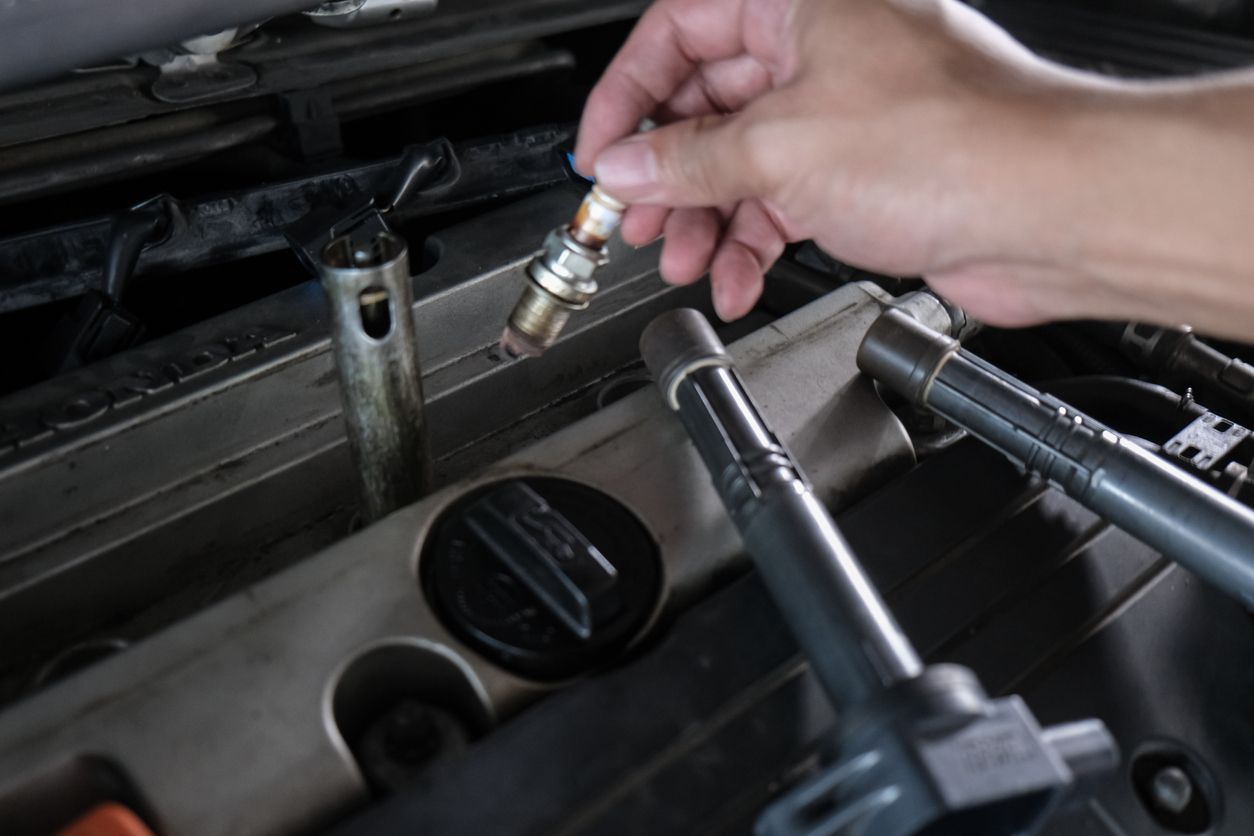
13 Symptoms of a Bad Ignition Coil
Below are the most common signs of a failing or weak ignition coil. Some may hit you suddenly; others show up intermittently and slowly get worse over weeks or months.
We’ll explain not only what the symptom feels like, but also what other problems it can easily be mistaken for.
1. Rough Idle (Especially When Cold)
A failing ignition coil often becomes noticeable first at idle. The engine feels uneven, shaky, or “breathing irregularly,” as if one cylinder is firing out of rhythm.
Why it mimics other issues:
-
Rough idle is also caused by vacuum leaks
-
Weak or dirty fuel injectors
-
Dirty throttle body
-
Bad PCV valve
That’s why many people clean the throttle body or replace the PCV valve long before they look at the ignition coils.
2. Engine Misfire – Intermittent or Constant
A misfire happens when the combustion cycle isn’t completed. Weak ignition coils are notorious for causing intermittent misfires—especially when the coil begins to break down under heat.
Why it mimics other issues:
-
Fuel injector misfires look identical
-
Low fuel pressure mimics misfire symptoms
-
Sticking valves or worn spark plugs can cause the same behavior
Many drivers confuse these overlapping symptoms for months before discovering the coil was the root cause.
3. Loss of Power and Poor Acceleration
Press down on the gas pedal and nothing much happens. The throttle may feel sluggish, or the engine may hesitate before it starts to pick up.
Why it mimics other issues:
-
Low fuel pressure
-
Failing MAF sensor
-
Clogged catalytic converter
-
Dirty air filter
-
Transmission slipping
Because “low power” can come from so many places, ignition coils are rarely the first suspect.
4. Hard Starting or Extended Crank Time
Sometimes the engine cranks longer than normal before firing up. Other times it may struggle to start only when the engine is cold or, conversely, when it’s hot.
Why it mimics other issues:
-
Bad crankshaft position sensor
-
Weak battery
-
Worn spark plugs
-
Dirty fuel injectors
Hard starting caused by a weak ignition coil is especially difficult to diagnose because it isn’t constant.
5. Engine Backfiring
Unburned fuel can ignite in the exhaust system when a coil fails to generate a strong spark. The result can be a loud pop or bang from the exhaust—sometimes even flames.
Why it mimics other issues:
-
Incorrect timing
-
Rich fuel mixture
-
Leaking fuel injector
Many people start looking at the fuel system first, not realizing the root cause is spark-related.
6. Poor Fuel Economy
When the air-fuel mixture doesn’t burn efficiently, more fuel is wasted. Even a single weak ignition coil can drop MPG noticeably.
Why it mimics other issues:
-
Bad oxygen sensor
-
Stuck-open thermostat
-
MAF sensor issues
-
Dirty injectors
Because fuel economy changes slowly, drivers often blame driving habits before the coil.
7. Check Engine Light (CEL) with Misfire Codes
Modern cars quickly detect misfires and will set codes like:
-
P0300 – Random/multiple misfires
-
P0301–P0308 – Misfire on cylinder X
-
P0350–P0362 – Ignition coil circuit faults
Why it mimics other issues:
-
Injector misfire codes appear extremely similar
-
Vacuum leaks also trigger P0300
-
Compression issues can mimic ignition failures
Without scanning live data, even professionals sometimes misdiagnose the cause of a misfire code.
8. Vibrating or Shaking Under Load
One of the most classic signs of a bad ignition coil is shaking or vibration when the engine is under stress—such as going uphill or accelerating hard.
Why it mimics other issues:
-
Clogged fuel filter
-
Weak fuel pump
-
Transmission shudder
Load-sensitive failures commonly get mistaken for fuel-related issues.
9. Exhaust Smell (Sulfur or Unburned Fuel)
When fuel doesn’t combust fully, it passes into the exhaust and creates a strong smell—sometimes sulfur-like, sometimes raw-gas-like.
Why it mimics other issues:
-
Rich mixture caused by O2 sensor
-
Stuck fuel injector
-
Failing catalytic converter
Most drivers assume a fuel problem, not an ignition one.
10. Stalling at Idle or When Stopping
A coil that intermittently fails may cause the engine to shut off completely, especially when RPM drops.
Why it mimics other issues:
-
Dirty throttle body
-
Bad idle air control (IAC) valve
-
Weak fuel pump
-
Vacuum leaks
Many people replace the IAC valve before discovering the ignition coil is the true culprit.
11. Engine Hesitation or Jerking While Driving
This is a common scenario: you’re cruising at 40 mph, and suddenly the car bucks or jerks as if you lifted off the gas. Then it returns to normal.
Why it mimics other issues:
-
Failing transmission
-
Fuel pump pulsation
-
Dirty MAF sensor
Jerking is so common that it becomes one of the most misdiagnosed coil symptoms.
12. Engine Won’t Start After Getting Warm (Heat Soak Failure)
Some ignition coils develop internal cracks that worsen as they heat up. The car may start fine cold but refuse to restart when hot.
Why it mimics other issues:
-
Bad crankshaft position sensor
-
Vapor lock (older vehicles)
-
Battery/alternator issues
Heat-soak coil failures are often overlooked.
13. Decreased Engine Performance in Wet Weather
Moisture can worsen the insulation breakdown inside a weak ignition coil.
If your engine runs rough only in rain or high humidity, this is a major red flag.
Why it mimics other issues:
-
Wet spark plug wires
-
Moisture in fuel
-
Intake leaks that worsen in humidity
Weather-related ignition coil failures are startlingly common—yet rarely recognized.
Why Bad Ignition Coil Symptoms Mimic Other Car Problems
Bad ignition coils are so easy to misdiagnose because they cause incomplete combustion, which manifests in many generic ways:
-
loss of power
-
misfires
-
shaking
-
hesitation
-
poor fuel economy
These are the same symptoms you’d expect from:
-
fuel injectors
-
spark plugs
-
MAF sensor
-
crankshaft/camshaft position sensors
-
oxygen sensors
-
fuel pump
-
vacuum leaks
To put it simply:
Any problem that disrupts the air, fuel, or spark mixture can feel exactly like a coil failure.
And any coil failure can feel exactly like a fuel problem.
That’s why diagnosis requires patience—and often a scan tool to see misfire counts and coil activation patterns.
What Causes Ignition Coils to Fail?
Coils don’t fail randomly. The most common causes include:
✔ Heat damage
Coils sit on top of the engine and face constant thermal cycling.
✔ Oil contamination
A leaking valve cover gasket can drown coils in oil and kill them prematurely.
✔ Moisture intrusion
Water getting trapped around the coil pack leads to internal shorts.
✔ Worn spark plugs
Old plugs force coils to work harder, increasing resistance and heat.
✔ Poor-quality aftermarket coils
Cheap coils frequently fail within months.
✔ Age and mileage
Most ignition coils simply wear out with time.
Can You Drive with a Bad Ignition Coil?
You can, but you really shouldn’t.
Driving with a failing coil risks:
-
catalytic converter damage
-
reduced engine lifespan
-
severe misfires
-
unexpected stalling (dangerous at high speed)
A bad coil that causes unburned fuel to enter the exhaust can destroy a catalytic converter in under 100 miles.
How Long Do Ignition Coils Last?
Under normal conditions:
-
80,000–120,000 miles is typical
-
Some last over 150,000 miles
-
Cheap coils may fail under 20,000 miles
Driving habits, weather, and spark plug condition all play a role.
FAQ: Common Questions About Bad Ignition Coil Symptoms
1. Can a bad ignition coil cause a check engine light?
Yes. Misfire codes (P0300–P0308) and coil circuit codes (P0350-P0362) are common indicators.
2. Can a bad ignition coil feel like a fuel injector problem?
Absolutely. Misfires from injectors and coils feel almost identical without scan data.
3. Can a bad ignition coil cause transmission issues?
Not directly, but misfires under load can feel like transmission shudder or slipping.
4. Will a bad ignition coil ruin spark plugs?
Not usually. Actually, the reverse is more common—old plugs strain the coil until it fails.
5. Should I replace all ignition coils at once?
Many mechanics recommend replacing them in sets, especially if the vehicle has high mileage.
6. Are cheap ignition coils worth it?
Generally, no. Cheap coils fail quickly and often cause repeat misfire issues.
7. Can a bad ignition coil cause a no-start?
Yes, especially if the coil to cylinder 1 or a main coil pack fails completely.
8. Do ignition coils fail suddenly or gradually?
Both. Some fail instantly; others show intermittent symptoms for weeks.
9. How do weather changes affect bad ignition coils?
Moisture worsens weak insulation, so misfires may appear only during rain or high humidity.
10. Should you diagnose a coil with a scan tool?
It’s the most reliable way. Live misfire counts, coil activation signals, and fuel trims help pinpoint the exact cause.
Final Thoughts
Ignition coil failures frustrate so many drivers because the symptoms—misfires, shaking, loss of power, hesitation—mirror dozens of other engine issues. But once you understand how the ignition system works and how coils fail, you can usually narrow down the issue quickly.
If your engine feels like it’s losing power, missing, or jerking under load, don’t ignore it.
A small misfire today can become a major repair tomorrow.