
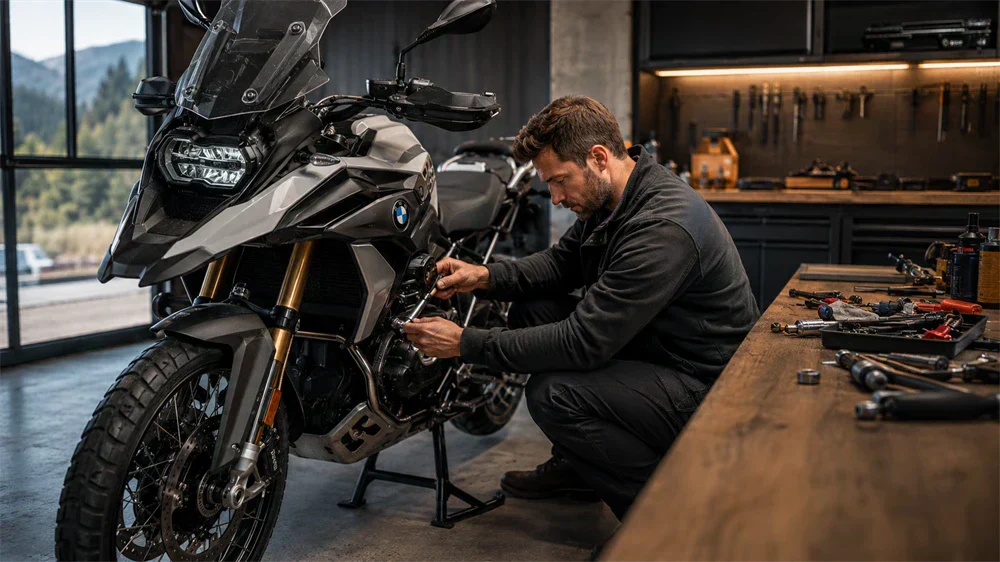
Owning a BMW Motorrad is a different kind of experience. These motorcycles are built for long-distance travel, technical precision, and rider confidence. But they also come with something many owners quickly discover after their first dealer visit: maintenance costs that add up fast.
A simple service reminder reset can cost over $100. ABS brake bleeding? Sometimes several hundred dollars depending on the model. Diagnostics alone may involve hourly labor charges before any repair even begins.
That’s one reason more BMW riders across the United States are turning toward DIY maintenance.
Not because they want to replace professional technicians. And not because every repair should happen in a home garage. The shift is happening because modern diagnostic tools have made basic maintenance, service resets, and electronic troubleshooting far more accessible than they were just a few years ago.
For many riders, learning these skills is no longer just about saving money. It’s about independence.
Why BMW Motorrad Maintenance Has Changed
BMW motorcycles used to be more mechanical than digital. Today, that balance has changed dramatically.
Modern BMW Motorrad models rely on interconnected electronic systems to manage everything from throttle response and ABS performance to service intervals and ECU adaptation. Even routine maintenance tasks now involve software communication.
Disconnect the battery? The ECU may need to relearn adaptation values.
Replace brake fluid? Certain ABS systems may require activation procedures during bleeding.
Perform your own oil change? The service reminder still stays on unless you reset it electronically.
This is where many riders become frustrated. The motorcycle itself may be mechanically sound, yet a small electronic procedure still forces a trip to the dealer.
The good news is that these systems are not as mysterious as they seem. With the right understanding—and the right tools—many maintenance tasks can be handled safely at home.
The Core DIY Maintenance Tasks Every BMW Rider Should Understand
Not every service procedure requires advanced mechanical knowledge. In fact, some of the most common BMW maintenance tasks are primarily electronic.
Below are the core areas every BMW Motorrad owner should become familiar with.
1. Resetting the BMW Service Light
One of the first things riders encounter after performing their own oil change is the service reminder still showing on the dashboard.
The motorcycle may be perfectly maintained, but the ECU has no way of knowing the service was completed unless the interval is reset manually.
On newer BMW motorcycles, this typically requires a compatible diagnostic scanner capable of accessing service functions.
While the reset process itself is simple, it represents a much larger shift in modern motorcycle ownership: maintenance records and reminders are increasingly controlled through software.
For DIY riders, learning how to reset the service light is often the gateway into BMW diagnostics.
👉How to Reset BMW Motorcycle Service Light with OBD2 Scanner?
2. ABS Bleeding and Brake System Maintenance
Brake maintenance has always been important, but modern BMW ABS systems add another layer of complexity.
Traditional brake bleeding methods may not fully circulate fluid through the ABS module. On some models, trapped air inside the system can remain unless the ABS pump is electronically activated during the bleeding procedure.
That’s why many experienced riders now use diagnostic tools when servicing BMW brake systems.
This doesn’t mean ABS bleeding is impossible for home mechanics. It simply means the process has evolved.
More importantly, understanding the electronic side of the brake system helps riders avoid common mistakes, especially after fluid replacement or component servicing.
👉How to Bleed ABS Brake on a BMW Motorcycle with OBD2 Scanner?
3. Resetting Adaptation Values
BMW motorcycles continuously learn from rider behavior and environmental conditions. The ECU adjusts fuel delivery, throttle sensitivity, and idle characteristics over time through stored adaptation values.
Most riders never notice this system working in the background. Until something changes.
Maybe the battery was disconnected. Maybe throttle response suddenly feels inconsistent. Maybe the bike hesitates during acceleration after maintenance.
In situations like these, resetting adaptation values can help the ECU rebuild fresh learning data.
However, adaptation reset is not a magic fix for every problem. Mechanical faults, failing sensors, or intake leaks still require proper diagnosis. The reset simply clears outdated learned behavior so the ECU can start over.
Understanding when this procedure helps—and when it doesn’t—is one of the most valuable skills a BMW owner can develop.
👉When Should You Reset Adaptation Values on a BMW Motorcycle?
4. Reading and Clearing Fault Codes
One of the biggest advantages of owning a modern diagnostic scanner is visibility.
Instead of guessing why a warning light appeared, riders can read fault codes directly from the motorcycle’s systems. This includes engine management, ABS, battery systems, and more.
Sometimes the issue is minor. Sometimes it points to something that should not be ignored.
Either way, having access to diagnostic information changes the ownership experience completely.
Rather than relying entirely on dealership appointments, riders gain the ability to evaluate problems immediately and make informed decisions.
That level of control matters—especially during long trips or remote travel.
How DIY Maintenance Saves BMW Owners Money
The financial side of DIY maintenance becomes obvious quickly.
A dealership may charge:
- $80–$150 for a service light reset
- $200–$400 for ABS brake bleeding
- Hourly diagnostic labor fees before repairs even begin
Over several years of ownership, those costs compound fast.
Meanwhile, a quality diagnostic scanner becomes a one-time investment that continues paying for itself.
But the savings go beyond labor costs.
DIY maintenance also reduces downtime. Riders don’t need to wait weeks for service appointments during peak riding season. They can scan systems, clear reminders, monitor faults, and perform basic procedures whenever necessary.
For many owners, that convenience is just as valuable as the money saved.
Choosing the Right Diagnostic Tool Matters
Not all motorcycle scanners are equal.
Basic OBD readers may retrieve generic engine codes, but BMW motorcycles often require access to manufacturer-specific systems and service functions. That includes:
- Service reminder resets
- ABS functions
- Adaptation resets
- ECU communication
This is why many riders eventually upgrade to a more advanced bi-directional diagnostic tool.
Devices like the CGSULIT SC530 series are designed specifically for deeper motorcycle diagnostics, allowing riders to interact directly with the motorcycle’s electronic systems instead of simply reading codes.
For DIY maintenance, that difference is significant.
The goal isn’t to replace professional technicians. It’s to handle routine electronic maintenance safely and confidently without unnecessary dealership dependence.
Common DIY Mistakes BMW Riders Should Avoid
DIY maintenance can save money and build confidence, but shortcuts create problems quickly.
One common mistake is clearing fault codes without diagnosing the underlying issue. The warning light disappears temporarily, but the real problem remains unresolved.
Another issue involves incompatible scanners. Some tools claim BMW compatibility but lack critical service functions or stable communication with motorcycle systems.
Battery voltage is another overlooked factor. Low voltage during diagnostic procedures can interrupt ECU communication and create additional faults.
And finally, many riders underestimate the importance of relearn procedures after resets or repairs. Modern motorcycles depend heavily on adaptive systems. Resetting data without allowing the ECU to relearn properly can lead to inconsistent performance afterward.
Patience matters.
When DIY Maintenance Is Not Enough
Not every problem should be handled in a home garage.
There are situations where professional diagnosis is the safer choice:
- Internal engine damage
- Complex CAN bus communication failures
- Severe brake system faults
- Persistent electrical issues
Good DIY riders know their limits.
In fact, understanding when to seek professional help is part of responsible motorcycle ownership. The goal of DIY maintenance is not ego—it’s knowledge and independence.
Sometimes independence means recognizing when expert support is necessary.
A Practical BMW Motorrad DIY Routine
Many experienced riders follow a simple maintenance rhythm throughout the year.
Monthly:
- Scan for fault codes
- Check battery condition
- Inspect brake fluid levels
Every Service Interval:
- Change fluids
- Reset service reminders
- Inspect brake components
After Repairs:
- Reset adaptation values if necessary
- Perform relearn procedures
- Monitor ECU behavior during the next rides
A consistent routine prevents small problems from becoming expensive ones.
FAQ
Can I maintain a BMW motorcycle myself?
Yes. Many routine maintenance tasks—including diagnostics, service resets, and adaptation procedures—can be safely handled by owners with the proper tools and knowledge.
Do I need a scanner for BMW Motorrad maintenance?
For modern BMW motorcycles, yes. Many electronic functions and service procedures now require diagnostic access.
Is ABS bleeding difficult on BMW motorcycles?
It depends on the model. Some ABS systems require electronic activation procedures during bleeding.
Can I reset the BMW service light without visiting a dealer?
Yes, with a compatible diagnostic scanner that supports BMW service reset functions.
Is DIY maintenance safe for modern motorcycles?
When performed correctly and within reasonable limits, absolutely. The key is understanding both the mechanical and electronic systems involved.
References
This article reflects general motorcycle diagnostic and maintenance principles referenced by BMW Motorrad, Bosch, SAE International, and Haynes Manuals.
Final Thoughts
BMW Motorrad ownership has evolved. These motorcycles are more advanced than ever, but they are also more connected to software, diagnostics, and electronic systems.
For riders willing to learn, that evolution creates opportunity.
DIY maintenance is no longer limited to oil changes and chain adjustments. Today, riders can access service systems, perform resets, monitor ECU behavior, and better understand how their motorcycles actually operate.
Not every repair belongs in a home garage. But many maintenance tasks do.
And in the long run, the ability to maintain your own motorcycle brings something dealerships can’t sell:
Confidence. Independence. And a deeper connection to the machine you ride.
Related Articles
Top BMW Motorrad Error Codes: What They Mean and How to Fix Them
Guide to Bleed ABS Brake on a BMW Motorcycle with OBD2 Scanner 2026
BMW Motorcycle Throttle Body Relearn vs. Adaptation Reset: What’s the Difference?
How to Reset BMW Motorcycle Service Light with OBD2 Scanner?
BMW Motorrad Spring Prep 2026: 7 Essential Checks Before Your First Ride
When Should You Reset Adaptation Values on a BMW Motorcycle?