
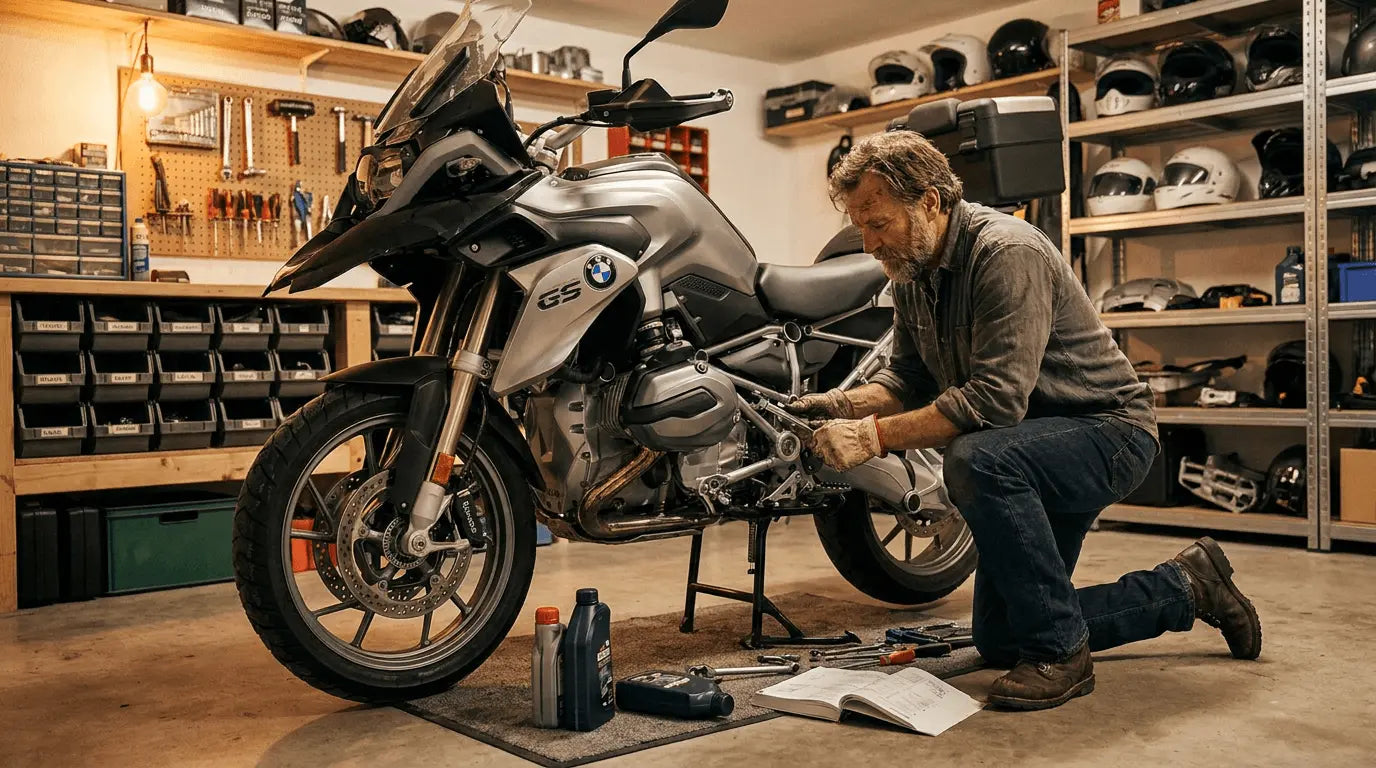
A Practical DIY Guide to Save Money, Improve Reliability, and Reduce Dependence on Dealership Service
BMW motorcycles have earned a reputation for engineering excellence, long-distance comfort, and advanced technology. Whether you ride a GS across state lines, commute on an F-series bike, or enjoy weekend rides on an R nineT, proper maintenance is one of the biggest factors that determines how reliable your motorcycle will be over the years.
Yet many BMW owners assume that every maintenance task requires a dealership visit.
That's simply not true.
While certain repairs should always be handled by trained technicians, many routine maintenance procedures can be safely performed at home with basic tools and a little knowledge. In fact, thousands of BMW riders across the United States now perform their own inspections, oil changes, diagnostics, service resets, and preventive maintenance to reduce ownership costs and gain a better understanding of their motorcycles.
The rise of modern diagnostic tools has accelerated this trend. Tasks that once required dealership equipment are increasingly accessible to independent riders.
The result? Lower maintenance costs, fewer service appointments, and greater confidence on every ride.
In this BMW motorcycle DIY maintenance guide, we'll cover ten maintenance tasks that nearly every rider can learn to perform at home, along with the tools, skills, and safety considerations needed to do them correctly.
Why More BMW Riders Are Maintaining Their Bikes at Home
Over the past decade, motorcycle ownership has changed significantly.
BMW motorcycles have become increasingly sophisticated. Electronic throttle control, ABS systems, traction control, service interval monitoring, and adaptive ECU programming now play major roles in everyday operation.
At the same time, dealership labor rates have steadily increased across the United States.
For many owners, a simple service appointment can easily cost hundreds of dollars before any major repair work begins.
Common dealership charges may include:
- Oil service labor
- Diagnostic fees
- Service reminder resets
- Brake system maintenance
- ECU-related procedures
Many riders eventually realize that a significant portion of these services involve routine inspections or electronic functions that can be performed independently.
DIY maintenance isn't just about saving money. It offers several additional benefits:
Better Understanding of Your Motorcycle
Riders who maintain their own motorcycles often identify small issues before they become major problems.
Greater Riding Confidence
Knowing how your motorcycle works creates confidence during long trips and remote adventures.
Reduced Downtime
Instead of waiting days or weeks for service appointments, many routine tasks can be completed whenever your schedule allows.
Lower Ownership Costs
Perhaps the most obvious advantage is avoiding unnecessary dealership labor charges.
For modern BMW owners, learning basic maintenance has become one of the smartest investments they can make.
Before You Start: Basic Tools Every BMW Motorcycle Owner Should Have
You don't need a professional workshop to maintain a BMW motorcycle. However, a few quality tools make the process easier and safer.
Torque Wrench
BMW motorcycles rely on precise torque specifications.
Over-tightening fasteners can damage expensive components, while under-tightening creates safety risks.
A quality torque wrench should be considered essential.
Tire Pressure Gauge
Incorrect tire pressure affects:
- Handling
- Tire wear
- Fuel economy
- Braking performance
Checking tire pressure regularly is one of the easiest and most important maintenance habits.
Battery Tester
Modern motorcycles depend heavily on electrical systems.
A battery tester allows riders to identify weak batteries before they cause starting issues or trigger fault codes.
>>Click to check the Battery Tester for your BMW bike>>
Motorcycle Diagnostic Scanner
Today's BMW motorcycles contain multiple electronic control units.
A motorcycle diagnostic scanner can help with:
- Reading fault codes
- Clearing warning lights
- Service resets
- Adaptation resets
- System diagnostics
This tool has become increasingly valuable for DIY riders.
BMW motorcycle scanner : GS911, CGSULIT SC530 Pro, Motoscan...
Basic Hand Tools
A basic toolkit should include:
- Screwdrivers
- Allen keys
- Socket set
- Pliers
- Inspection flashlight
These simple tools cover the majority of routine maintenance tasks.
10 BMW Motorcycle Maintenance Tasks Every Rider Can Do at Home
1. Check Tire Pressure and Tire Condition
If there is one maintenance task every rider should perform regularly, it's tire inspection.
Tires directly affect:
- Stability
- Cornering performance
- Braking distance
- Rider safety
BMW recommends checking tire pressure frequently, particularly before long rides.
While checking pressure, inspect:
Uneven Wear
Uneven wear may indicate:
- Improper inflation
- Suspension issues
- Wheel alignment problems
Tread Depth
Worn tires dramatically reduce wet-weather performance and increase stopping distances.
Visible Damage
Look for:
- Cracks
- Embedded objects
- Cuts
- Sidewall damage
A two-minute inspection can prevent a roadside emergency.
2. Monitor Battery Health
Battery problems are among the most common causes of motorcycle breakdowns.
Modern BMW motorcycles rely on stable voltage to operate:
- ECU systems
- ABS modules
- Ride modes
- Electronic suspension systems
Regular battery testing is especially important before:
- Riding season
- Long-distance trips
- Cold-weather operation
Signs of battery deterioration include:
- Slow cranking
- Intermittent starting
- Dashboard warnings
- Voltage below recommended levels
A battery tester can identify issues long before complete failure occurs.
3. Change Engine Oil and Oil Filter
Engine oil is the lifeblood of your motorcycle.
Its responsibilities include:
- Lubrication
- Cooling
- Cleaning
- Corrosion protection
Following BMW motorcycle service intervals helps maximize engine longevity.
Common Oil Change Mistakes
DIY riders often make several mistakes:
- Using incorrect oil specifications
- Overfilling the crankcase
- Reusing crush washers
- Skipping oil filter replacement
Always consult your owner's manual for proper oil requirements and service intervals.
Routine oil changes remain one of the most cost-effective maintenance tasks available.
4. Inspect Brake Pads and Brake Fluid
Brake performance should never be taken for granted.
Regular inspections can identify wear long before safety becomes compromised.
Check Brake Pad Thickness
Brake pads gradually wear down through normal use.
Inspect:
- Front brake pads
- Rear brake pads
- Wear indicators
Replace pads before they reach minimum thickness specifications.
Inspect Brake Fluid
Brake fluid absorbs moisture over time.
Contaminated fluid can cause:
- Reduced braking performance
- Internal corrosion
- Increased stopping distances
Dark fluid often indicates replacement may be necessary.
5. Keep the Air Filter Clean
Your engine needs clean air to produce efficient power.
A clogged air filter restricts airflow and may contribute to:
- Reduced performance
- Poor fuel economy
- Rough idle conditions
Inspection intervals depend heavily on riding conditions.
Riders who frequently encounter:
- Dirt roads
- Construction zones
- Dusty environments
should inspect filters more frequently.
Fortunately, air filter maintenance is typically straightforward and inexpensive.
6. Read and Clear Fault Codes
One of the biggest advantages of modern motorcycle diagnostics is access to fault codes.
When warning lights appear, many riders immediately schedule a dealership visit.
However, diagnostic trouble codes often provide valuable insight into the problem.
Common systems monitored include:
- Engine management
- ABS
- Sensors
- Charging systems
- Communication networks
Reading fault codes allows riders to make informed decisions before paying diagnostic labor fees.
For a deeper look at fault diagnosis, consider reading our BMW Motorcycle Fault Codes Guide.
7. Reset the Service Reminder
Many riders perform their own oil changes only to discover that the service reminder remains active afterward.
This occurs because BMW motorcycles track service intervals electronically.
The maintenance may be complete, but the motorcycle still believes service is due.
Using a compatible diagnostic tool, riders can:
- Reset service reminders
- Update service intervals
- Maintain accurate maintenance records
For detailed instructions, see our BMW Motorcycle Service Light Reset Guide.
8. Perform an Adaptation Reset When Necessary
Modern BMW ECUs continuously learn from riding conditions.
Over time, adaptation values influence:
- Idle quality
- Fuel delivery
- Throttle response
Certain situations may justify resetting adaptation values:
After Battery Replacement
Power interruptions can affect learned data.
After Sensor Replacement
New components may benefit from fresh ECU learning.
After Major Repairs
Engine-related repairs often warrant recalibration.
When Throttle Response Feels Unusual
Inconsistent throttle behavior may sometimes improve after adaptation relearning.
However, adaptation resets are not solutions for mechanical failures.
For a complete explanation, read our article:
When Should You Reset Adaptation Values on a BMW Motorcycle?
9. Bleed the ABS Brake System
Brake fluid replacement is a critical part of motorcycle preventive maintenance.
Over time, moisture contamination reduces braking efficiency.
BMW motorcycles equipped with ABS require particular attention because fluid may circulate through additional components.
Benefits of periodic ABS bleeding include:
- Improved brake feel
- Better braking consistency
- Reduced internal corrosion
- Longer system lifespan
Many riders choose to combine brake fluid replacement with regular service intervals.
For detailed procedures, visit our BMW ABS Bleeding Guide.
10. Perform a Complete Visual Inspection Before Every Ride
Professional riders often follow a simple inspection method before riding.
One popular framework is T-CLOCS:
Tires
Pressure, wear, and damage.
Controls
Throttle, clutch, and brake operation.
Lights
Headlights, indicators, and brake lights.
Oil & Fluids
Check for leaks and proper levels.
Chassis
Inspect fasteners, suspension, and frame components.
Stands
Ensure side stands and center stands function properly.
This habit takes only a few minutes but can prevent costly mechanical failures.
When DIY Maintenance Is Not Enough
Responsible maintenance also means recognizing your limitations.
Some situations require professional diagnosis and repair.
Examples include:
Internal Engine Problems
Unusual noises, compression loss, or internal damage.
ABS Module Failures
Complex electronic brake system faults.
CAN Bus Communication Issues
Network-related electrical problems can be difficult to diagnose.
Advanced Electrical Faults
Persistent wiring or module failures often require specialized equipment.
Seeking professional assistance when necessary is a sign of good judgment—not weakness.
How Much Money Can DIY Maintenance Save?
One reason BMW riders embrace DIY maintenance is simple economics.
| Service | Typical Dealer Cost | DIY Cost |
|---|---|---|
| Oil Change | $150–$300 | Cost of oil and filter |
| Service Reminder Reset | $80–$150 | Included with compatible tool |
| Basic Diagnostics | $100–$200 | Anytime access |
| Battery Check | Diagnostic fee possible | Free at home |
| Routine Inspection | Labor charges apply | Free |
Over several years of ownership, the savings can be substantial.
More importantly, riders gain immediate access to maintenance information without scheduling appointments.
Frequently Asked Questions
Can I maintain a BMW motorcycle myself?
Yes. Many routine maintenance tasks can be performed safely at home, including inspections, oil changes, battery checks, diagnostics, and service resets.
What maintenance should I do on a BMW motorcycle?
Basic maintenance includes tire inspections, oil changes, battery monitoring, brake inspections, fault code checks, and periodic fluid replacement.
How often should I service a BMW motorcycle?
Service intervals vary by model. Always follow the schedule outlined in your BMW owner's manual.
Do I need a diagnostic scanner for BMW maintenance?
For modern BMW motorcycles, a diagnostic scanner is highly recommended because many systems rely on electronic monitoring and service functions.
Is DIY motorcycle maintenance safe?
Absolutely—provided you follow proper procedures, use appropriate tools, and stay within your skill level.
References
This article is based on general maintenance principles and information commonly referenced from:
- BMW Motorrad Owner's Manuals
- BMW Motorrad Service Information
- Bosch Motorcycle Systems Documentation
- SAE International Technical Resources
- Haynes Motorcycle Repair Manuals
Small Maintenance Habits Lead to Better Riding Experiences
BMW motorcycles are engineered to cover thousands of miles reliably, but reliability doesn't happen by accident.
Routine maintenance remains one of the most effective ways to protect your investment, improve safety, and enhance riding enjoyment.
The best part is that many maintenance tasks don't require a dealership visit. By learning a few essential skills and investing in the right tools, riders can perform much of their own maintenance, reduce ownership costs, and become more confident motorcyclists.
In the end, DIY maintenance isn't just about saving money. It's about understanding your machine, becoming a more capable rider, and enjoying the freedom that comes with true motorcycle ownership.
Related Articles
Top BMW Motorrad Error Codes: What They Mean and How to Fix Them
Guide to Bleed ABS Brake on a BMW Motorcycle with OBD2 Scanner 2026
BMW Motorcycle Throttle Body Relearn vs. Adaptation Reset: What’s the Difference?
How to Reset BMW Motorcycle Service Light with OBD2 Scanner?
BMW Motorrad Spring Prep 2026: 7 Essential Checks Before Your First Ride